Why we invested in agri-processing: Unlocking opportunity for Nigeria’s microenterprises
Agriculture is the backbone of Nigeria’s rural economy, yet millions of smallholder farmers struggle to convert their hard-earned harvests into stable income. Limited access to electricity, processing facilities, post-harvest storage, and reliable buyers forces farmers to sell raw crops at low margins, while the country spends billions importing processed food products that could be produced locally. This structural gap constrains rural incomes, weakens food security, and keeps microenterprises disconnected from the value they create.
Localized agri-processing offers one of the fastest ways to shift this dynamic. By shifting the value addition of crops closer to where they are grown, microenterprises can reduce transport costs and post-harvest losses(which reach as high as 40% for key staples in Nigeria) while earning 2–3x higher margins on processed goods. Electrification of processing unlocks even bigger gains: switching from diesel to electric appliances can cut operating costs by 30–70% and stabilize earnings for rural processors whose livelihoods remain vulnerable to volatile fuel prices.
That’s why ClimaFii Alliance has invested in Farm Warehouse, a company powering decentralized agri-processing to help rural producers retain more value locally and build more resilient livelihoods.
Farm Warehouse – Powering rural prosperity through decentralized processing
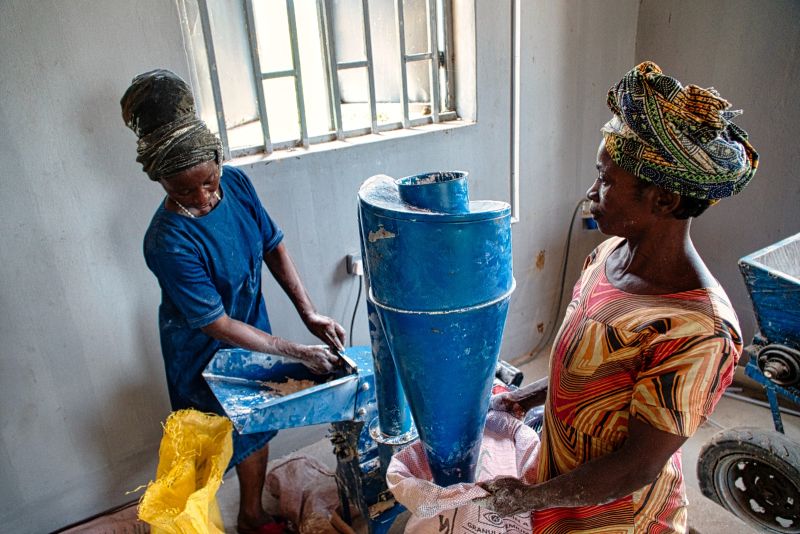
Farm Warehouse addresses the core barriers that prevent Nigeria’s smallholder farmers and micro-processors from deriving greater value from their crops. They equip farmers and processors with high-quality, productive-use electric equipment, such as hammer mills and rice mills, installed at mini-grid-powered community hubs. These hubs provide the essential infrastructure needed to process, store, and aggregate produce close to where it is grown, strengthening market access and reducing post-harvest losses.
The model combines equipment sales, service, and flexible, affordable asset finance with guaranteed offtake for processed goods, enabling customers to own productive assets while ensuring a consistent supply of quality products. By integrating energy, processing, and market linkages into one platform, the company helps rural producers lower operating costs, stabilize income, and retain more value locally.
Why ClimaFii is leaning in
At ClimaFii, our thesis is simple: climate technologies scale fastest when they strengthen microenterprise productivity. Agri-processing sits at the heart of this belief, driving income uplift, reducing emissions from diesel and food spoilage, and enhancing resilience for rural communities.
What makes Farm Warehouse stand out is its integrated approach – bundling access to equipment, finance, power, and markets into a single platform that accelerates microenterprise growth. The model is inclusive, commercially viable, and replicable across rural Nigeria and beyond.
Tackling the financing barrier
Electric processing equipment can dramatically lower operating costs and improve margins, but only if rural entrepreneurs can afford to own it. For many farmers and processors, the greatest hurdle is not demand or usage, but access to fair and flexible finance. Traditional lenders hesitate to serve rural processors who lack formal credit records, leaving entrepreneurs dependent on expensive short-term arrangements that strain cash flow.
ClimaFii is helping Farm Warehouse shift this reality by strengthening the financial infrastructure underpinning expansion – refining lease-to-own structures to align payment schedules with agricultural income, leveraging IoT to monitor asset performance, improving credit reporting systems to showcase repayment reliability, and establishing lender partnerships that unlock more affordable working capital. These improvements are helping to reduce risk for financiers and expand rural entrepreneurs’ ability to acquire productive-use assets that generate lasting income gains.
Beyond capital: Building for scale
Scaling agri-processing requires more than deploying equipment; it depends on strong operations, reliable data, and strategic routes to market. This is where ClimaFii’s venture-building model accelerates growth. Together with Farm Warehouse, we are improving the digital backbone of the business by automating portfolio monitoring, integrating impact reporting dashboards, and strengthening product workflows that reduce downtime and enhance utilization.
We are simultaneously sharpening their commercial strategy, from optimizing hub locations and channel priorities to reinforcing customer-acquisition approaches that elevate profitability and increase women’s participation. By combining capital with hands-on operational and market-building support, we are enabling Farm Warehouse to transition from early pilots to scalable expansion and to transform food systems where it matters most.
A more resilient future for food systems
Agri-processing is more than a value-addition step; it unlocks stronger earnings, empowers rural businesses, and contributes to cleaner and more efficient food systems. As farmers retain more value locally, communities benefit from higher incomes, new job opportunities, and reduced dependence on imported goods.
The opportunity ahead is clear: enable more microenterprises to enter the most profitable segments of the value chain. Achieving this will require collaboration among innovators, financiers, policymakers, and market off-takers to build resilient food economies across Africa.
If you’re a partner exploring where climate impact and rural inclusion intersect, let’s talk.
![[Press Release] Shell Foundation and Accion announce new program to finance and scale emission-reducing technologies in emerging markets](https://bfaglobal.com/wp-content/uploads/2025/01/solar-panels-field-against-clear-sky-450x250.jpg)