Why we invested in clean cooking: Tackling Africa’s most persistent household energy challenge
Across Africa, millions of households and microenterprises still cook over charcoal stoves, wood fires, and kerosene burners. The smoke rising from these fuels every day carries a silent but devastating health risk that too often goes unnoticed. According to the World Health Organization, indoor air pollution from household cooking claims approximately 4.2 million lives globally each year, with the burden falling disproportionately on women and children in low-income communities. In Kenya alone, an estimated 23,000 people die annually from cooking-related indoor pollution, the majority of them women living on less than $2 a day.
Most of the alarming global statistics on cooking and health are driven by rural cooking. The WHO reports that 49% of people in rural areas still rely on polluting cooking fuels, compared with just 14% in urban areas, a gap mostly explained by the open three-stone fires and gathered firewood common in the countryside. That is a real and urgent crisis, but it is different from the one Africa’s urban microenterprises face. In cities, households, small restaurants and hotels, and street food vendors are not gathering free firewood; they are buying charcoal, often daily, in a market where prices have moved sharply. In Kenya, charcoal use more than doubled between 2022 and 2023 as households fled rising LPG costs, pushing charcoal prices to a four-year high. Research from informal settlements in Sierra Leone found that charcoal already consumes up to 20.5% of a minimum-wage earner’s monthly income, and noted that food-based microenterprises face even higher fuel expenditure, simply because cooking is the core of their business. For Africa’s urban working poor, the status quo is not just dangerous, it is expensive.
The problem is compounded by a second crisis: Africa generates over 19 million tons of plastic waste every year. Much of it ends up in drainage systems, on roadsides, and in open landfills, degrading the environment, threatening health, and representing a massive missed opportunity.
This is why ClimaFii Alliance has invested in Mega Gas and Zuhura Solutions – two Kenyan startups demonstrating that clean cooking can be affordable, scalable, and transformative for the low-income households and microentreprises who need it most.
Their work sits inside one of the most chronic and underserved challenges in the global energy transition. Despite decades of international attention and investment in cleaner energy, close to 2.3 billion people worldwide still cook with polluting fuels. The barriers are persistent and interconnected: clean fuel alternatives remain unaffordable for low-income households and microenterprises; distribution infrastructure is weak in informal urban settlements; and financing mechanisms are rarely designed around the cash flows of daily wage earners or informal food vendors. Solving clean cooking at scale, in other words, requires more than better stoves and cooking services. It demands business models that work for customers earning $1–$3 a day, distribution strategies designed for dense informal settlements, and financing innovations that match the daily, unpredictable cash flows of Africa’s working poor.
Innovating from the ground up
Mega Gas and Zuhura Solutions approach the clean cooking challenge from different angles, but together illustrate the range of innovation needed to reach Africa’s most underserved cooks and food vendors at scale.
Mega Gas: Turning plastic waste into clean cooking energy
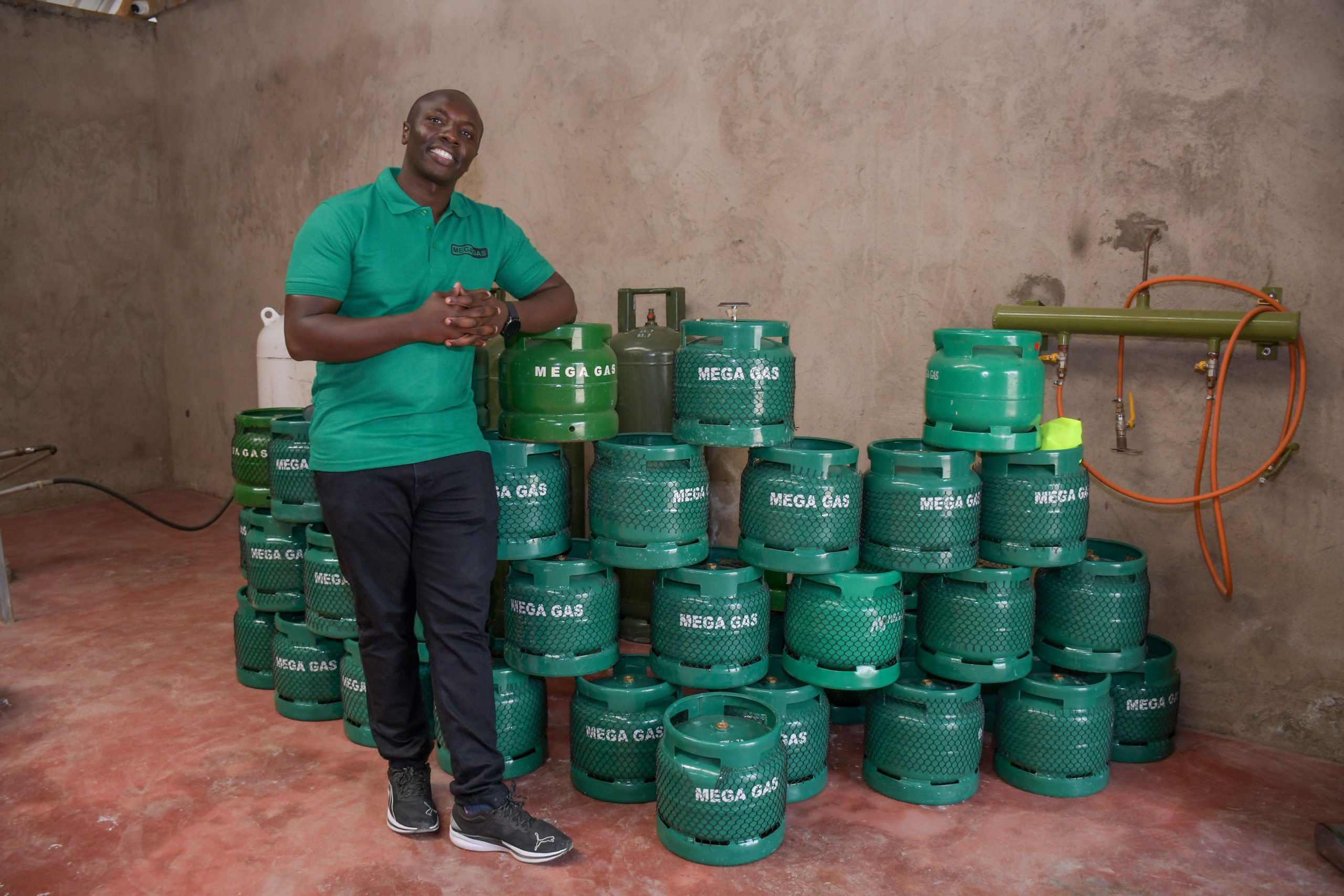
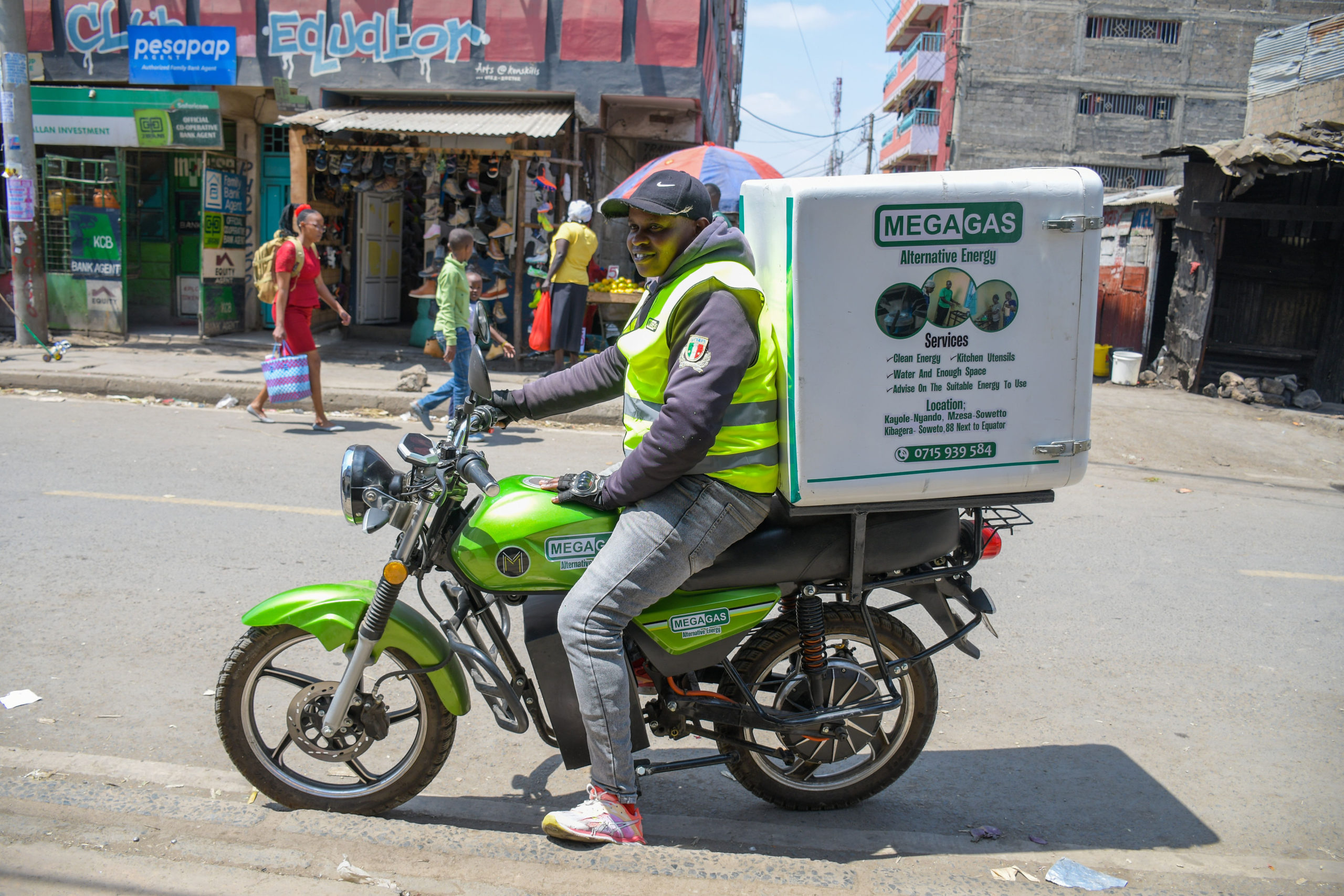
Mega Gas is a Nairobi-based clean cooking and circular-economy energy company with a founding story rooted in personal experience. The founder grew up in Soweto, one of Nairobi’s largest informal settlements, watching his mother cook over wood fires in a smoke-filled kitchen. That firsthand encounter with energy poverty became the driver behind the company’s innovative clean cooking solutions.
The company converts collected plastic waste into clean cooking gas through an innovative thermal cracking process, then distributes the gas to low-income households and informal food vendors through a network of community kitchens. Customers access cooking services on a pay-as-you-cook basis as low as $0.02 per hour, meaning there are no costly upfront purchases and no large fuel cylinders to buy. Compared to conventional LPG, Mega Gas costs approximately 50% less per unit and delivers 25% higher calorific value, meaning the gas burns hotter and lasts longer.
The community kitchen model is deliberate. By centralizing cooking infrastructure, Mega Gas makes clean energy accessible to households and microenterprises that would never be able to afford private gas connections or cylinder deposits.
Central to the model is a second circular-economy loop – a network of waste pickers who collect the feedstock plastic, diverting it from landfills and waterways while earning a livelihood. This positions Mega Gas not just as an energy company, but as a waste management infrastructure provider, one that is building formal collection systems in informal settlements where municipal services rarely reach. Through our research with Mega Gas customers, we found that microenterprises using its community-based kitchens roughly doubled their incomes, freeing up cash previously lost to expensive, inefficient fuel and redirecting it back into their businesses.
Zuhura Solutions: Empowering microenterprises with hybrid solar cooking
Whereas Mega Gas focuses on household and small-enterprise cooks in residential informal settlements, Zuhura Solutions targets a different but equally underserved group: East Africa’s 1.2 million urban street food vendors – just one type of the microenterprises that make up Africa’s informal food economy.
These vendors, predominantly women, are critical nodes in Africa’s food supply system, yet most rely on charcoal-based cooking, a practice that exposes them to chronic smoke inhalation and imposes fuel costs that eat heavily into thin daily margins. Zuhura’s flagship product, the Halisi Trolley, replaces the charcoal stove entirely.
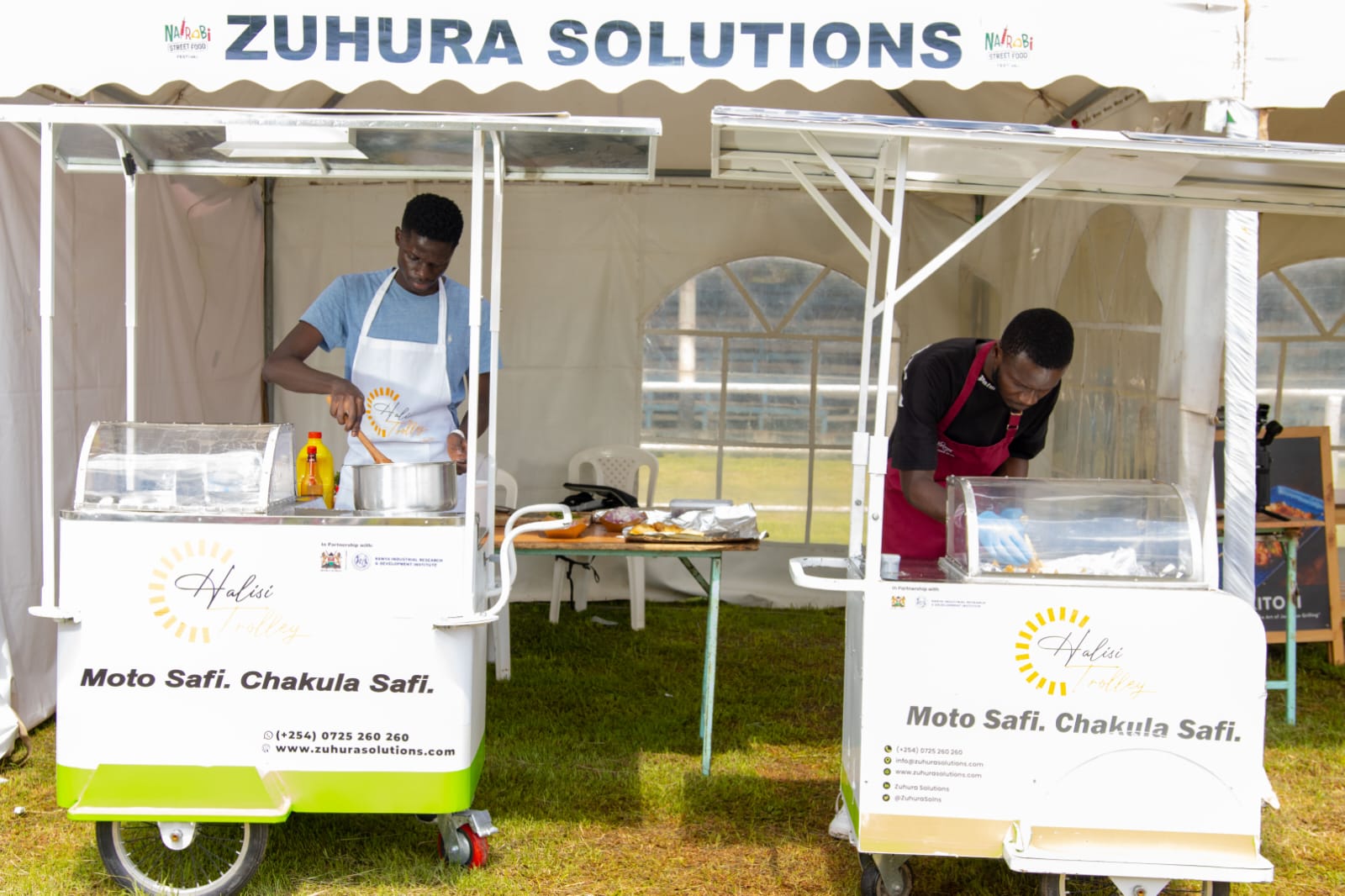
The Halisi Trolley is a hybrid solar and bio-ethanol clean cooking and vending solution. It integrates solar PV panels, a lithium iron phosphate battery with 14+ hours of runtime, a bio-ethanol cooker, hygienic food-grade compartments, mobile phone charging capability, and IoT-enabled monitoring. The result is a fully self-contained, mobile food vending unit that enables vendors to cook, heat food and sell in any location, day or night, without charcoal, without generator noise, and without smoke.
For vendors, the impact is tangible. The trolley’s solar-powered lighting enables evening operations, eliminating charcoal use, reducing costs and daily procurement time, and improving food presentation and hygiene, thereby attracting more customers. Through our research with Zuhura Solutions customers, we found that vendors using the Halisi Trolley also roughly doubled their daily incomes, due to lower fuel costs, longer operating hours, and higher footfall. Beyond income, the trolley improves health outcomes by eliminating daily exposure to smoke.
Zuhura Solutions offers the Halisi Trolley through a PAYGO and rent-to-own model designed around vendors’ daily cash flows: approximately 20% down followed by small daily payments via M-Pesa over two and half years. This structure keeps the trolley accessible to vendors who have never engaged with formal financial services and would struggle to qualify for traditional credit.
Why ClimaFii is leaning in
At ClimaFii, we back clean cooking companies when we see a convergence of three things: a genuine willingness to build models around the economics of microentreprises, a product that delivers measurable health and environmental impact, and founders committed to treating the communities they serve as partners rather than beneficiaries.
Both Mega Gas and Zuhura Solutions embody this approach, and each brings a distinct perspective on how to make clean cooking work for the microenterprises that need it most. We are proud to have invested in both companies and to be providing them with ongoing technical assistance as they scale. We are excited about their future.
A cleaner cooking future for Africa’s microenterprises
Clean cooking is not a niche climate intervention. It sits at the intersection of public health, women’s economic empowerment, waste management, and energy access — four of the most consequential development challenges on the continent. And it is a sector where the economic case for clean alternatives is getting stronger with every innovation that reduces cost and improves distribution.
Mega Gas and Zuhura Solutions are proving that clean cooking can be commercially viable, not by targeting premium consumers, but by engineering affordability from the ground up, designing distribution for informal settlements, and building financing models that fit the lives of people earning a few dollars a day.
We are proud to support Mega Gas and Zuhura Solutions and look forward to sharing their progress as they scale.
![[Press Release] Shell Foundation and Accion announce new program to finance and scale emission-reducing technologies in emerging markets](https://bfaglobal.com/wp-content/uploads/2025/01/solar-panels-field-against-clear-sky-450x250.jpg)