Agri-energy: How ClimaFii is backing the ventures closing Africa’s post-harvest processing gap
This post turns to a related problem, agri-energy: how clean, decentralized power turns a raw, highly perishable harvest into a shelf-stable, higher-value product in the first place, rather than keeping it cold until someone buys it as it is.
ClimaFii Alliance is a venture support program, delivered in Sub-Saharan Africa by BFA Global and Accion. We look for sectors where clean energy adoption and microenterprise income growth are the same bet rather than two separate goals, and agri-energy is one of the more direct examples: reliable drying and processing infrastructure can be the single thing standing between a farmer’s crop and a market willing to pay a premium for it. Two companies in our portfolio show how that works: aQysta and BioAfriq Energy.
The sector, and why it matters for microenterprises
Post-harvest loss remains one of the largest, most persistent drags on farmer income across Africa. The Food and Agriculture Organization (FAO) estimates that roughly 23% of Sub Saharan food production is lost or wasted along the supply chain each year, and losses run considerably higher for specific crops: the Kenya Agricultural and Livestock Research Organization (KALRO)) puts post-harvest losses for mango at 40–45%. Drying is one of the biggest points of failure in that chain, because it is the step that determines whether a crop becomes a shelf-stable, sellable product or spoils before it reaches a buyer.
Reliable drying, in turn, depends on reliable energy, which is what is missing across much of rural Africa. In Malawi, for example the World Bank puts national electricity access at roughly 26% of the population, falling to under 4% of rural households specifically. Without power, drying largely means open-air mats and tarps left in the sun: slow, entirely weather-dependent, and prone to the humidity and microbial growth that gets a batch rejected by a quality-conscious buyer.
The people absorbing this loss are overwhelmingly microenterprises: smallholder farmers, farmer cooperatives acting as aggregators, small-scale agro-processors, and traders who buy raw or lightly processed produce for resale. A farmer without reliable drying faces the same dilemma as any margin-squeezed trader without infrastructure, which is to sell the harvest immediately, often at a depressed price, or risk losing it to spoilage entirely. Where reliable, food-safe drying does reach these businesses, the effect is straightforward: a raw, highly perishable crop becomes a shelf-stable, often export-grade product, unlocking pricing and buyers that were previously out of reach.
Portfolio spotlight
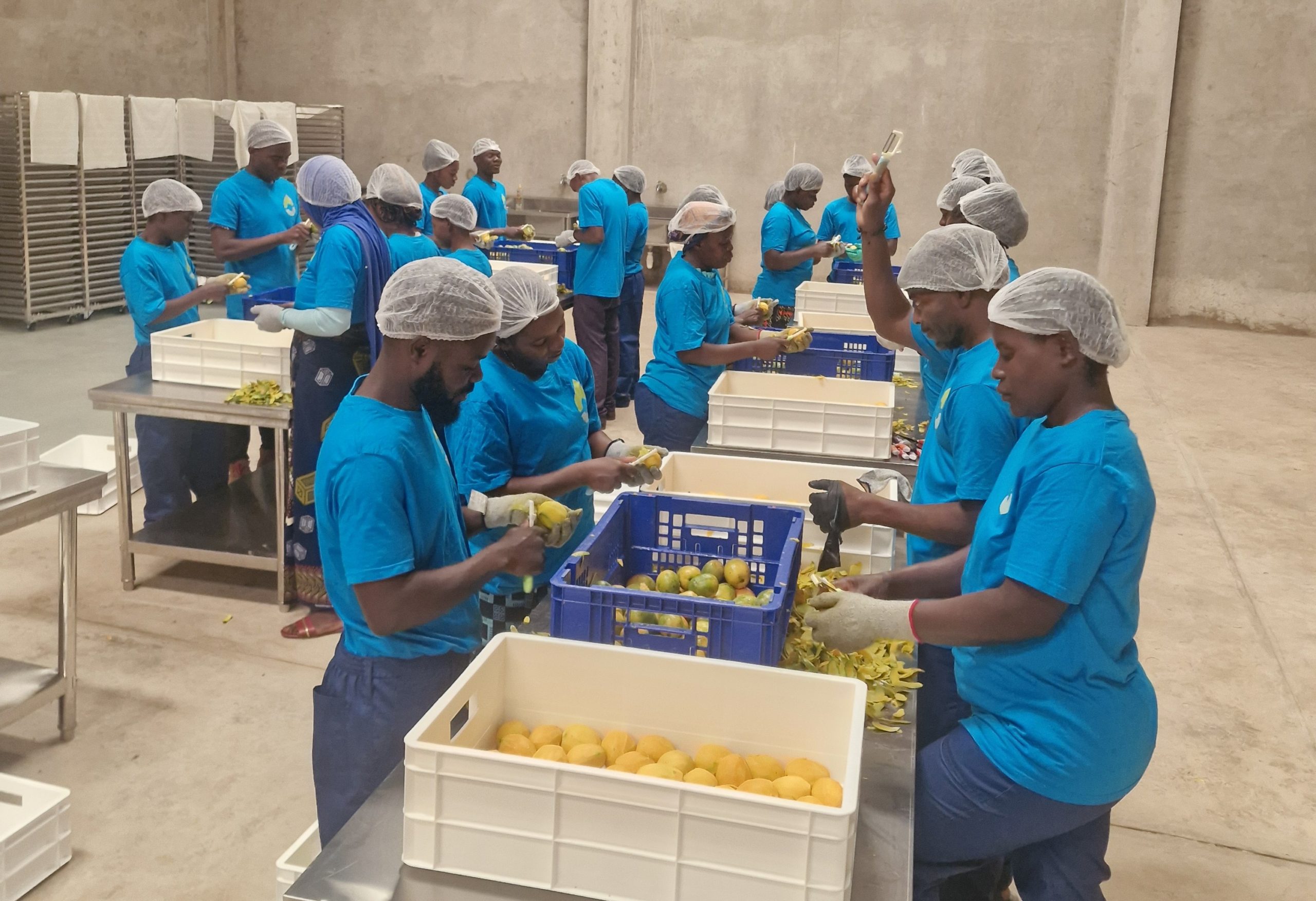
Rather than selling processing equipment, aQysta owns and operates the infrastructure itself under a revenue-sharing model: farmers and cooperatives get access to the equipment and aQysta’s services at no upfront cost. When the harvest is ready, aQysta buys the crops directly from farmers at a premium over local market rates, manages processing and inventory, and connects the produce to market, selling the finished product to food companies, including domestic African manufacturers and European buyers sourcing organic, traceable ingredients, such as HPW and Midsona. A portion of the sales revenue covers the equipment and service costs, so the farmer never carries that expense upfront and doesn’t have to handle the economics of export or quality certification either. aQysta absorbs that risk and complexity.
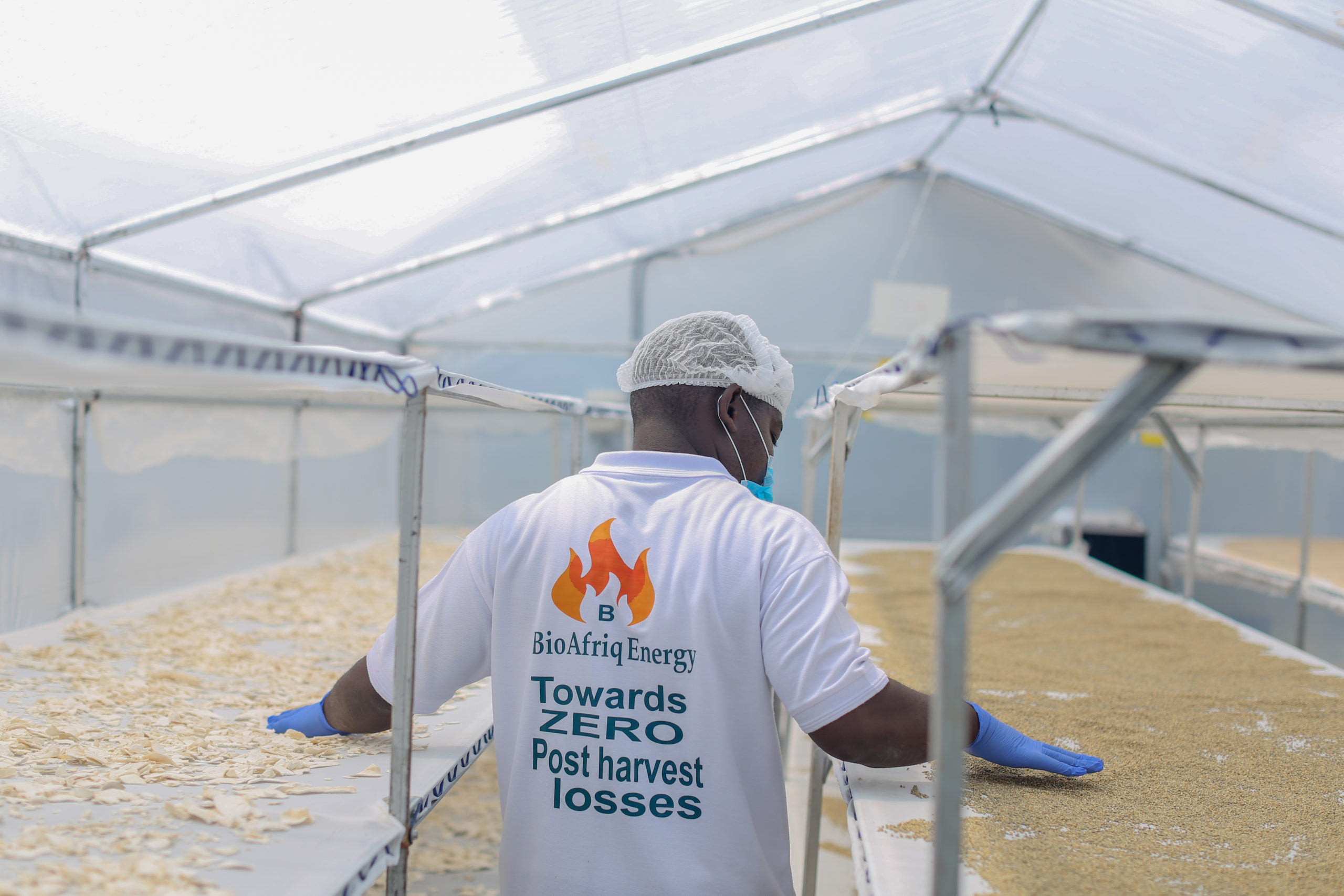
BioAfriq Energy, operating in Kenya, takes a different approach to this problem. Instead of owning the crop economics, it sells drying capacity directly, charging agro-microenterprises a processing fee through what it calls Dehydration-as-a-Service (DaaS). Its patented hybrid solar-biomass dryer combines UV-treated solar thermal collectors with biomass heating fuelled by farm residues like cassava peels, engineered airflow, food-safe drying chambers, and IoT monitoring, delivering more consistent, all-weather drying than the uncovered solar dryers common across the region. Each hub is designed to serve multiple crops such as cassava, sorghum, millet, sweet potato, fruit, vegetables, herbs, mushrooms, cereals, and coffee, rotating through seasons to keep the asset earning ensuring it does not sit idle between harvests. On top of drying, BioAfriq layers in food-safety testing for moisture, mold, and aflatoxins and post-harvest handling training, plus market access through its own Taliana Nutrition off-take brand.
aQysta and BioAfriq solve the same problem, where poor energy access and heavy post-harvest loss compound each other, in two ways. One absorbs the market risk and pays farmers a premium for raw produce; the other sells drying capacity to the microenterprise and leaves off-take largely in the farmer’s hands. Both show that clean, decentralized processing can work commercially once it is paired with a market that will buy what comes out the other end.
What makes an agri-energy business model work
Solar and hybrid solar-biomass drying hubs are expensive, shared infrastructure serving customers who could not finance that equipment individually. These models then have to solve for aggregation and market access as a critical success factor.
This is important because no food company is going to buy a small quantity of dried produce from a single smallholder, as their businesses require scale. Each hub serves a whole cluster of producers, consolidating scattered small-scale output into volumes a processor or export buyer can transact on. Paired with multi-crop and multi-season approaches, the utilization of the infrastructure is high year-round.
The two business models diverge on who owns the go-to-market and price risk. aQysta pays farmers a fixed premium and takes on the job of finding and satisfying an export buyer itself, shielding the microenterprise from market risk entirely, at the cost of thinner, more capital-intensive economics for the company. BioAfriq charges a flat per-product processing fee and leaves the aggregators to sell into whatever market they can reach, with an assist from its own off-take brand – a lighter service model, but one whose income impact for the farmer still depends on a buyer being there afterward.
Where we see opportunity and where the road gets harder
The market opportunity
The underlying problem is large and still mostly unaddressed, and rural electrification rates are still in the single digits across much of the continent. Off-grid, productive-use processing looks like an emerging model still being built rather than a mature one being disrupted. This is exactly the stage where the right business model matters more than early scale.
The barriers holding the sector back
- Cost – A solar-biomass hub is a serious capital outlay [costing roughly $16,000 for a 1,000kg-capacity unit], before site preparation, storage, or the rest of a full processing hub is even factored in. This is well beyond what any individual smallholder or trader could finance, which is why both companies own the asset themselves rather than selling it outright.
- Off-take dependence – A model that pays farmers upfront depends on maintaining buyer relationships and consistently meeting quality and certification standards; losing a key buyer exposes the economics of an entire hub.
- Utilization risk – A pay-per-use model only works if a hub stays busy across crops and seasons; one built around a single harvest window runs at a fraction of its potential the rest of the year.
- Operational complexity – Running a centralized hub while aggregating produce from many small, scattered suppliers, managing quality control, and meeting export compliance is far harder than an asset-light approach.
- Awareness and trust – Farmers who have only ever seen weather-dependent, uncovered solar drying need to see the reliability and the better price a hybrid dryer delivers before they will commit produce to it.
Where the unlock is coming from
Two shifts stand out as likely to accelerate the whole sector.
The first is building the buyer relationship before scaling the hardware, instead of after. A processing hub is only worth as much as the market it can sell into, so the companies making the fastest progress, aQysta and BioAfriq among them, are the ones securing off-take commitments and building their own downstream brands early, then sizing hub capacity to match, instead of building capacity first and hoping a buyer materializes later.
The second is treating utilization, as opposed to installed capacity, as the real constraint on growth. A hub engineered to dry one crop for a few weeks a year can be a stranded asset most of the time; one designed to rotate across several crops and seasons becomes a production cluster that can run year-round. As that utilization logic spreads, it also changes what “scaling” means in this sector — less about installing more kilowatts, and more about keeping the kilowatts already installed well utilized.
What it takes to scale in this sector
- Capital intensity – Growth is gated by how much processing infrastructure a company can finance and build, not by underlying demand, which makes access to patient, blended capital like grants, concessional debt, working capital lines matter more here than in lighter-asset agri models.
- Off-take reliability – All of this works because of committed buyers at the other end willing to pay for a traceable, food-safety-tested product. Companies that build and protect that relationship directly, whether through export contracts or an in-house brand, de-risk the whole model for themselves and the farmers supplying them.
- Utilization discipline – Because the hub has to earn back its cost, multi-crop, multi-season design and disciplined scheduling matter as much as the underlying drying technology.
- Certification as a value add – Food-safety testing and export or quality certifications drive adoption and buyer trust, so certification capacity has to scale alongside every new hub.
Why we backed these business models
ClimaFii’s mandate covers post-harvest and productive-use energy solutions that deliver real transformation, preservation, or processing. Both companies fit that mandate directly. The entire value they create runs through a piece of clean-energy infrastructure that turns a perishable, low-value crop into a shelf-stable, higher-value one.
The climate case and the productivity case line up as well. Solar and hybrid solar-biomass drying displaces the diesel-fired and weather-dependent processing it replaces, while directly determining whether a farmer captures more value from a crop or loses it to spoilage and rejection. That overlap is what gives us confidence these models can scale without needing to subsidize behavior against what the customer already wants.
We look for companies with a working product already reaching microenterprises, a credible path to many more at scale, and a real relationship with the buyers or financing partners that let that income gain reach the farmer. aQysta and BioAfriq are two different but equally credible versions of that.