Financing the shift: How ClimaFii is backing asset finance for Africa’s microenterprises (Part 1)
Across Sub-Saharan Africa, small and medium-sized enterprises (SMEs) are the engine of the economy. This includes companies and microentrepreneurs like food, agri-inputs and FMCG distributors, agroprocessors, transporters and service providers. Logistics in particular plays a critical role across multiple sectors. As an example, an estimated 80–90% of the continent’s two- and three-wheelers are used commercially, carrying passengers, produce and parcels. For the riders behind them, fuel is the highest daily cost. The same pressure hits businesses off the road: roughly half of African businesses rely on backup diesel generators to stay operational during grid outages, and users in Sub-Saharan Africa spend close to US$20 billion a year on generator fuel alone.
Renewable energy and e-mobility offer commercial enterprises across the continent significant long-term savings. Solar costs are falling fast, and in many markets solar is already cheaper than grid power. Against diesel, the gap is wider still. In Nigeria, electricity from a generator costs US 0.30 – 0.60 per kWh from diesel or petrol generators, compared with roughly US 0.10 – 0.20 for solar PV. The same logic applies on the road, where electric two- and three-wheelers can sharply cut fuel costs. The catch is the upfront price. An electric motorcycle typically costs 57-58% more than a petrol one in Kenya and Nigeria before subsidies, and solar systems carry similar upfront costs, so both depend on financing. Unfortunately, the businesses that stand to gain the most are also the least likely to have a payslip, a credit history or collateral.
That gap is where data-driven asset finance comes in. This latest post in our series on the Climate & Finance Innovations Alliance (ClimaFii) portfolio looks at finance as a driver of the clean energy transition. It is the first of a two-part series on electric mobility. In Part 1 we look at the financiers: five companies developing innovative lending models that enable microenterprises to access and own assets such as electric motorcycles, batteries, solar systems, and productive-use equipment, helping them reduce costs and increase their incomes. Part 2 will explore the wider e-mobility ecosystem, focusing on the vehicles, charging infrastructure, and battery-swapping networks that keep these assets running.
The sector and why it matters
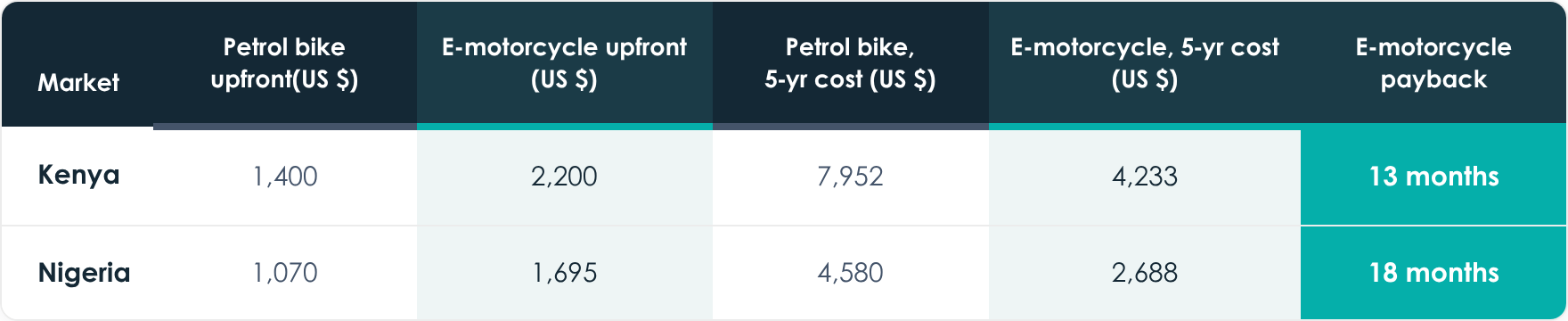
Across much of Africa, motorcycles play a vital role in transporting people and goods, while providing a source of income for millions. Kenya alone there are more than 2 million licensed boda boda riders, and the sector contributes at least 4.4% of the country’s gross domestic product (GDP). Most of these riders are microentrepreneurs, running small businesses built around a single motorcycle. Their earnings depend largely on the cost of operating and maintaining that motorcycle, and for many, this income is the primary source of financial support for their families. That is why electrification matters. Fuel is a rider’s largest daily expense, and an electric motorcycle cuts it sharply. Even with a higher sticker price, an e-motorcycle costs roughly half as much to own over five years and pays for itself in little more than a year:
Where policy and finance line up, adoption can accelerate. After Kenya removed VAT and excise duty on e-motorcycles and batteries, EV registrations rose from 1,378 in 2022 to 39,324 in 2025, driven largely by boda boda riders buying on credit. When South Africa expanded tax incentives for business solar in 2023, privately installed solar PV capacity grew from 983 MW in March 2022 to 4,412 MW by June 2023, a 349% increase. The growth coincided with a 2023 tax incentive that let businesses deduct 125% of qualifying renewable-energy investments brought into use between March 2023 and February 2025. Across East Africa and Nigeria, similar mixes of subsidies, tax relief and results-based financing can help households and small businesses reduce upfront costs over time, making clean energy more affordable and bankable.
Ownership is the goal, and finance is the bottleneck
The shift to renewable energy and electric mobility in Africa hinges on access to credit. A microentrepreneur who owns their energy or transport source keeps what he or she earns, while one who rents hands a large share of it to someone else every day. Yet those who stand to gain the most are the hardest to lend to. They earn daily in cash, have no payslip or credit history, and are rarely served by banks. Specialist lenders fill the gap, but because capital is expensive in these markets, borrowers often pay annual rates of 30-70%. Women face the steepest barriers of all, with lower asset ownership and less access to formal credit.
Portfolio spotlight

Our five financiers all tackle the same problem of access to finance from different starting points. Two begin with the vehicle, two with a distribution or merchant network, and one with an existing lending relationship.
Jiwambe (Kenya) helps Nairobi’s boda boda and delivery riders own electric motorcycles. Most of these riders are shut out of formal credit, so they rent bikes informally or keep aging petrol machines running. While other asset finance companies exist in East Africa, Jiwambe is fast, pragmatic and customer-centric, financing bikes from brands such as Spiro through hire-purchase, with a 10–20% deposit and repayments matched to riders’ daily earnings. Insurance is included, and partner manufacturers provide warranties and after-sales support.
What sets Jiwambe apart is that it finances both income and the asset. Through its fleet programmes , riders get guaranteed work on the platform along with their bike, so the vehicle earns from day one. Affordable credit, a reliable bike and a steady stream of trips together turn a rider who depends on rentals into an asset owner.
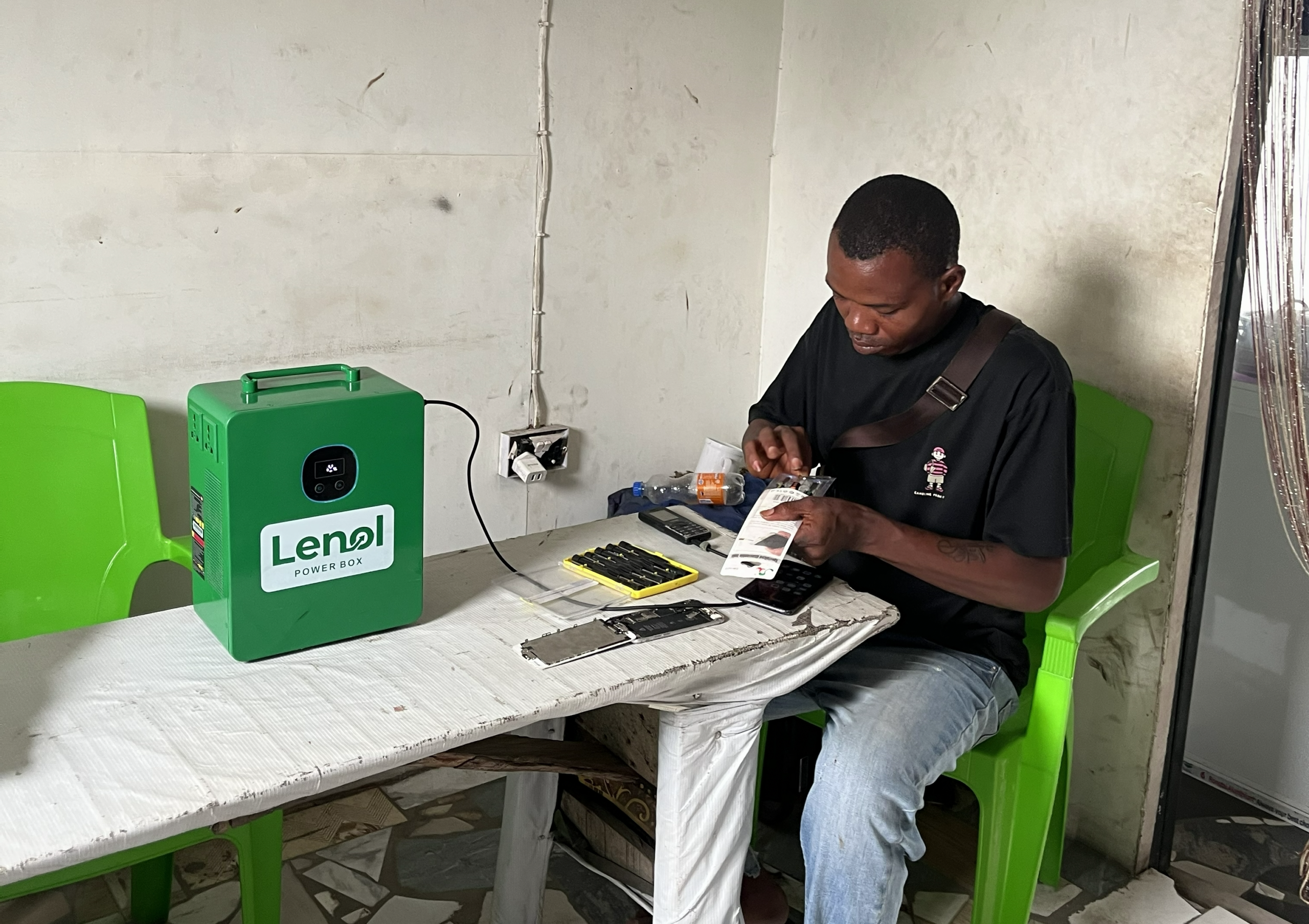
Lenol (Nigeria) is building shared clean energy infrastructure for Lagos’s informal markets, where traders and riders depend on petrol generators and motorcycles because the grid fails so often. At the heart of its model is the Powershop, a solar-powered energy hub placed inside a busy market and run by a local operator. One energy infrastructure serves two kinds of customers. Small businesses such as cold-drink sellers, tailors and salons rent modular batteries instead of running generators. Commercial riders swap e-motorcycle batteries in about 90 seconds.
For riders who want to own their bike, Lenol offers a staged path: a 60–90 day rental to prove the fit, then a 18-month lease-to-own agreement on an IoT-enabled e-motorcycle. They then provide structured daily payments that accommodate riders’ cash flows. Lenol’s software handles payments, battery management and usage tracking across the network.
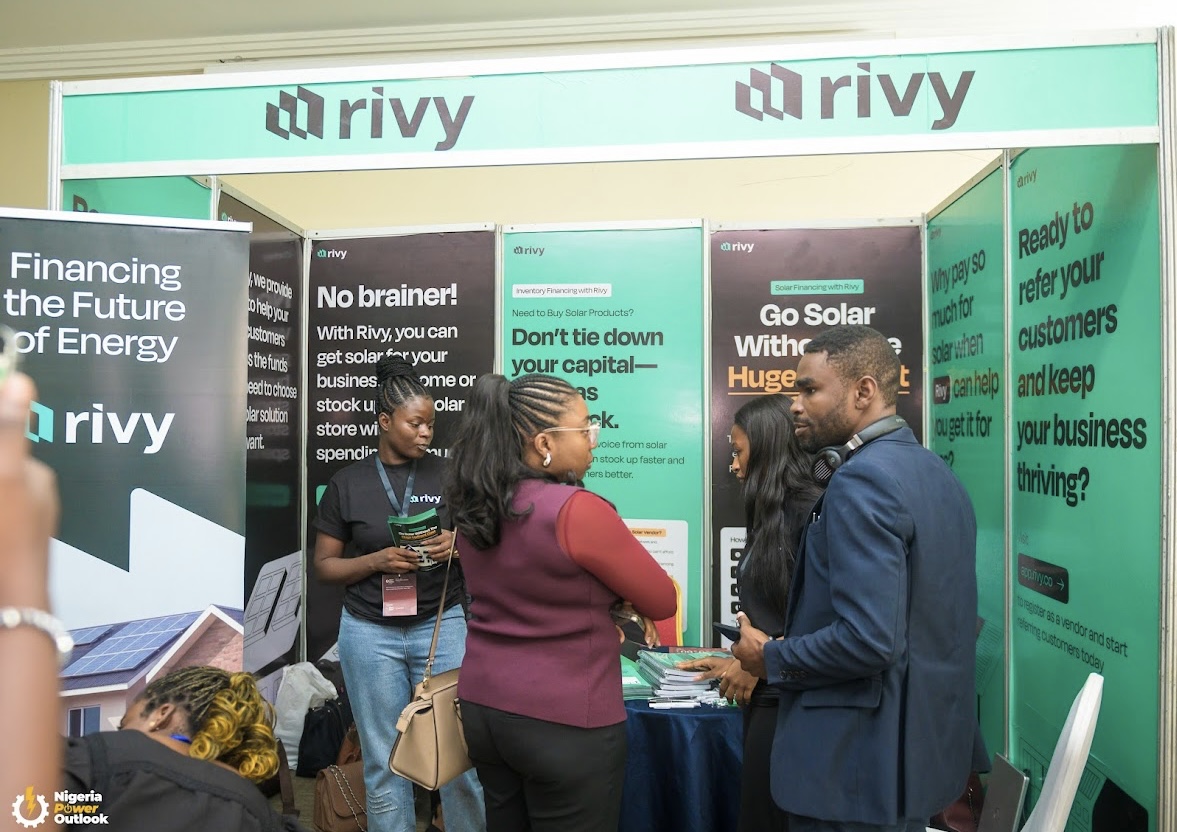
Rivy (Nigeria), formerly PayHippo, began as an SME lender and has become a specialist clean energy finance platform. It finances solar systems for homes and small businesses, provides inventory financing so solar vendors and installers can keep stock moving, and has expanded into electric-vehicle. Customers can size a system, choose their deposit and repayment period, and apply through Rivy’s app. Rivy is also offering much-needed trade and inventory financing for e-mobility and solar companies.
Rivy also tackles a problem that comes before credit: product quality. Its EnergyStack marketplace sells equipment from verified manufacturers, so the assets Rivy finances are ones it trusts to last. A further layer turns the clean energy its customers generate into energy certificates, which adds a new income stream from distributed solar. Rivy is backed by investors including Y Combinator and Prosper Global Ventures, and is well placed to apply fintech-style credit scoring to larger clean energy assets.
in24 (Uganda) builds the missing credit infrastructure for last-mile distributors. Across rural Africa, small local distributors sell e-bikes, solar systems, water pumps and farm equipment to customers who cannot afford to pay upfront. However, many of these distributors must also act as lenders, assessing creditworthiness, collecting repayments, and tying up their own working capital in the process.
in24 takes over this credit function, allowing distributors to focus on selling, installing, and servicing equipment. The company handles credit assessments, loan approvals, collections, and portfolio management, while financing loans through its own balance sheet. This gives customers access to more affordable financing and enables distributors to grow their businesses.
in24 became a licensed lender in Uganda in 2026. It now works with four distributors, including fellow ClimaFii company BrightLife, and finances e-bicycles (with Greenbay and Ebee), solar systems and solar irrigation pumps.
The team brings decades of experience in microfinance and last-mile, including ten years leading SolarNow Uganda, which disbursed over US$30 million in loans. Mozambique and Kenya are next, and the model is built to scale across many markets. For investors, in24 offers exposure to a large underserved market of income-generating assets, with the credit discipline of good microfinance.
Furaha Financial (Uganda) works to unlock finance for Uganda’s “missing middle”: microentrepreneurs and lower-middle-income households who are too informal for banks and pay dearly at informal lenders. The company, incubated by Standard Chartered Ventures, began with an ecosystem approach to school fee lending, one of the largest and least flexible costs a family faces. Its digital loans are offered through an app, USSD and mobile money, with partner banks such as DTB, Absa, Ecobank, Opportunity Bank, Cairo Bank and Finca, providing the capital and Furaha handling origination, credit scoring and collections.
That focus has given Furaha a few rare assets in this market: a large base of repeat borrowers with a proven repayment history, a robust lending platform and risk mitigation approach, and a strong low-cost source of capital from its partner banks. Furaha is now extending the same platform to alternative energy and business loans, such as electric motorcycles and productive-use assets. This brings customers it already knows into the clean energy transition. The company is piloting its e-mobility lending product at the end of this year.
What makes an asset finance model work
Lending to new-to-credit microenterprises is unforgiving. Across our portfolio companies, five practices make the difference.
Underwrite the asset’s cash flow, not the borrower’s payslip. For a commercial rider or a solar-powered shop, the key question is whether the asset will earn enough to cover its own installment. Electric motorcycles cut running costs so sharply that riders are often better able to repay than their credit files suggest. Jiwambe, Furaha and Lenol underwrite on this basis, and Lenol’s 60–90 day rental period tests a rider’s cash flow before they commit to a lease.
Match repayments to how income arrives. Riders and traders earn daily, in cash or mobile money. Furaha and Jiwambe’s repayments track riders’ daily earnings, and Lenol prices its batteries per day of use. Small, frequent payments make a bad week easier to absorb, but they only work if the asset raises income, not just cuts costs. Rivy evaluates cash flow tied to the asset in both consumer and small business lending.
Use the asset as both data and collateral. Electric vehicles and renewable energy assets generate data that petrol and diesel based solutions do not. With telematics, usage tracking and remote immobilisation, a lender can spot a struggling borrower early and recover the asset quickly if needed, as Lenol does with its IoT-enabled fleet. The harder question is what a used bike or battery is worth after repossession. Rivy’s marketplace of verified suppliers both reduce that risk by financing only products they trust to last.
Separate the lending engine from the capital and the sales channel. Specialist lenders understand these customers, banks hold the cheapest capital, and manufacturers and distributors know the product. The strongest models let each do what it does best. Furaha channels bank capital through its own platform, providing origination and risk mitigation as a service and broadening the pool of lenders. in24 lets distributors sell and service while it underwrites and collects. Both models should materially reduce cost of capital for customers.
Start from a credit relationship you already have. The hardest loan to make is the first. Furaha’s school-fee lending gives it a base of repeat borrowers with proven repayment histories before it finances a single e-motorcycle. Lenol and Rivy are also developing platforms that can work for financing multiple assets and use cases, and in24 already does so. M-KOPA in Kenya has shown this works at scale, moving from solar and smartphone financing to become one of the country’s leading e-motorcycle financiers (Techeconomy, 2026). Watu Credit has done the same, broadening from vehicle finance to smartphone finance.
Where the market is heading
Capital is starting to flow into African e-mobility, but its cost still sets the pace. Large battery-swapping and fleet operators are raising significant debt, while most microenterprises still depend on smaller lenders that borrow expensively in local currency.
What still holds the sector back
- Expensive local-currency capital. High base interest rates and currency risk feed directly into what borrowers pay. This is particularly true given forex fluctuations.
- Uncertain resale value. With few second-hand markets for e-motorcycles and batteries, lenders protect themselves with shorter loan terms and larger deposits.
- Weak grids outside East Africa. In markets such as Nigeria, unreliable power makes charging and swapping more expensive to run, adding to the capex burden.
- Dependence on subsidies. Much of the recent growth in off-grid solar has relied on subsidy programmes, which raises the question of what happens when they end.
What is starting to shift
- Blended finance is attracting mainstream lenders. Programs such as the Mitigation Action Facility’s €27 million initiative in Kenya and another in Rwanda use guarantees to draw commercial lending into tens of thousands of electric vehicles
- New lenders are entering the market. Microfinance institutions and consumer fintechs are beginning to finance EVs and solar, widening the pool of capital. The holy grail is to involve banks, and Furaha’s lending-as-a-service platform offers a new avenue for this.
- Platforms are making EV financing more accessible. Partnerships with demand-aggregation platforms, such as Jiwambe’s with ride hailing platforms, provide lenders with steady demand and greater visibility into riders’ income.
- Financial inclusion is becoming more intentional. More lenders are designing products for women and first-time borrowers. Every repaid installment also builds a credit history for someone who had none.
Why we backed these business models
Asset finance is where ClimaFii’s investment thesis is most direct. An e-motorcycle, a solar system or a battery unit can generate income for its owner from day one, while savings on fuel and generator costs help fund the repayments. When financing is well designed, climate impact and microenterprise income are not a trade-off. The same transaction delivers both, and the customer ultimately owns the asset.
In each company, we looked for three things:
- Credit discipline: Underwriting and collections designed around how microenterprises actually earn, with repayment performance that holds up as the business grows.
- A pathway larger, more affordable pools of capital: Partnerships with banks, institutional investors and other lenders that let each company grow beyond its own balance sheet.
- Inclusion by design: Daily repayments that fit informal incomes, products built for first-time borrowers, and deliberate efforts to reach women.
Financing gets a vehicle onto the road or replaces a diesel generator with a cleaner alternative . But keeping clean energy and transport assets running, and ensuring customers continue earning, is often the harder part . A lender’s ability to recover repayments depends on the asset’s reliability, while customers can only repay if their assets remain operational. In Part 2, we turn to the companies building the electric vehicle operations ecosystem in particular: TRÍ, which integrates electric three-wheelers, charging and fleet software; and Fanga, OKOA and Yongeza Capital, which are building battery-swapping networks across West, East and Central Africa.