Fisheries and clean energy – How ClimaFii is backing Africa’s fish value chain
ClimaFii Alliance is a venture support program, delivered in Sub-Saharan Africa by BFA Global and Accion, built on a simple premise – some of the most promising climate solutions on the continent are also, quietly, some of the most promising tools for growing microenterprise income. Clean cooking, e-mobility, distributed solar, and sustainable cooling all reduce emissions, but for the informal traders, smallholder farmers, and small business owners who make up the majority of Africa’s workforce, they can also mean lower operating costs, new revenue lines, and protection against the kind of loss that keeps a business small year after year. ClimaFii exists to find and back the companies building at that intersection, and to help them scale in ways that measurably improve microenterprise livelihoods alongside climate outcomes.
This post is the first in a series that walks through our 2026 cohort sector by sector – what each sector solves, how the business models underneath it actually work, where we see the market heading, and which companies we’ve backed and why. We’re starting with fisheries, because it’s arguably the sector where the connection between climate solutions and microenterprise income is most concentrated: almost every actor in the chain, from the fisherfolk catching the fish to the trader selling it, is a microenterprise, and a broken cold chain doesn’t just cost efficiency – it costs the catch itself. This blog looks at that value chain through two companies in our portfolio: Keep IT Cool and Samaking – two different approaches to bringing clean, affordable cold chain infrastructure into fisheries, from the point of catch to the point of sale.
The sector, and why it matters for microenterprises
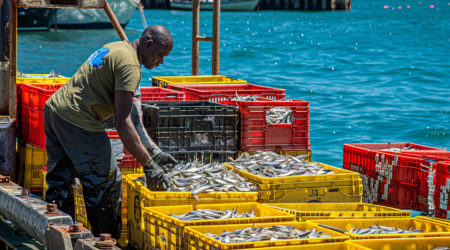
Fish is one of the most perishable foods in the value chain, and weak cold chain infrastructure means a large share of it never reaches a plate. Estimates put global fish loss and waste at roughly 27–35% of the total catch between landing and consumption. In Africa, loss across small-scale fish supply chains is driven largely by inadequate landing site infrastructure and a shortage of cold storage and handling capacity.
The nutritional stakes are real. Across Africa, an estimated 30.7% of children under five are stunted, well above the global average of 22%, and limited access to affordable animal protein, including fish, is one of the contributing factors.
The regional imbalance is stark. Kenya consumes around 4.7 kg of fish per person a year, one of the lowest rates in Africa. The African average is roughly 10 kg and over 20 kg globally, one of the lowest rates in Africa. Kenya produced around 161,000 metric tonnes of fish in 2023 (Kenya Fisheries Statistical Bulletin 2023), against demand that has significantly outpaced domestic supply. This is part of why East Africa’s aquaculture sector has more than tripled production since 2017 while still leaving a wide, persistent supply gap.
Nearly every step of this chain outside large-scale industrial operations is run by microenterprises: small-scale fish farmers and fisherfolk producing the catch, and informal fish traders, widely known in the region as mama samakis, who buy, transport, and resell fish to urban and peri-urban consumers, and who, by some estimates, supply the large majority of fish sold in markets like Nairobi. These businesses face the same structural problem as any thin-margin trader without cold storage: a microenterprise that can’t keep the catch cold has to sell immediately, often to a middleman at a depressed price, or lose the catch to spoilage entirely.
Portfolio spotlight
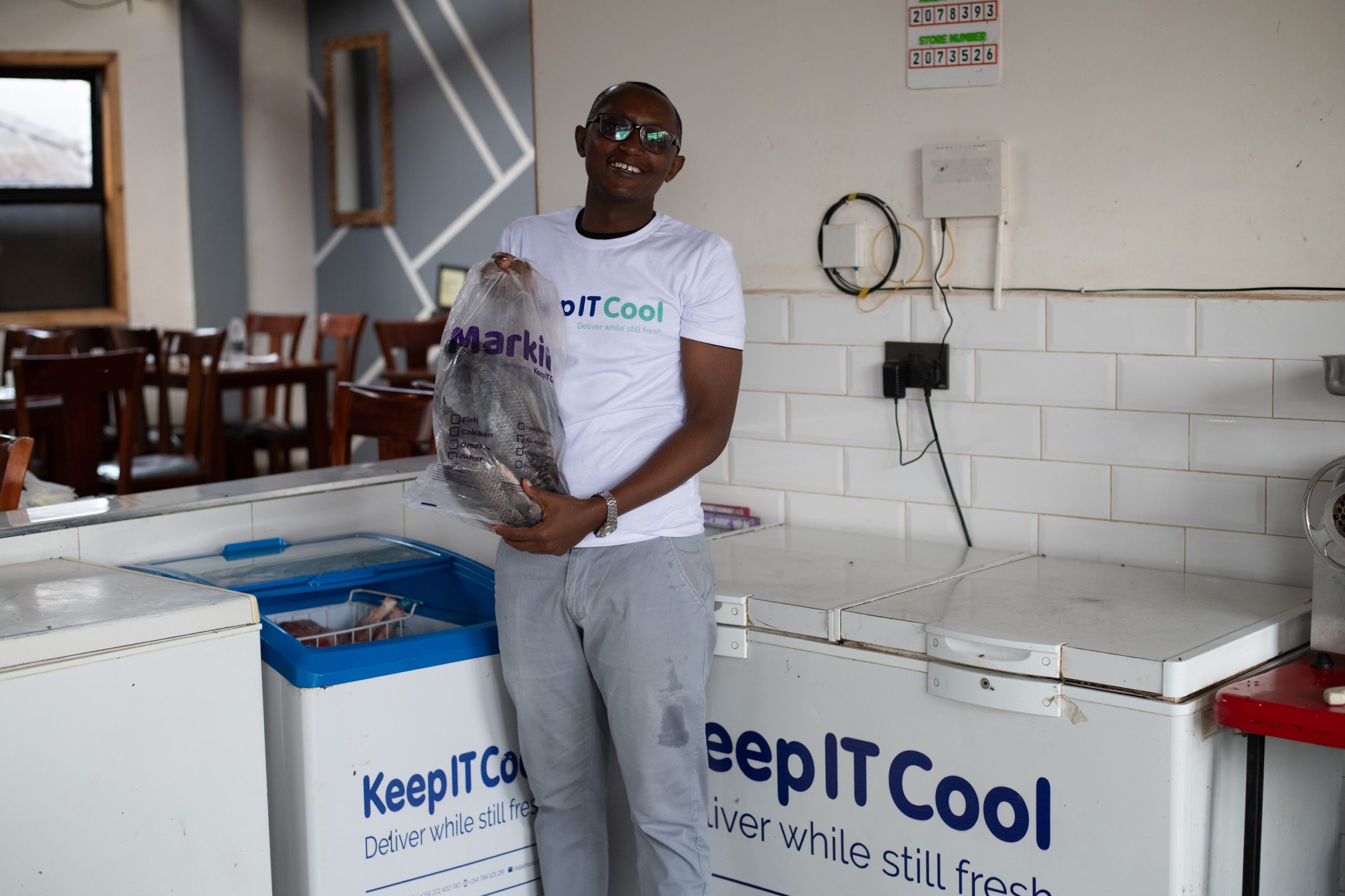
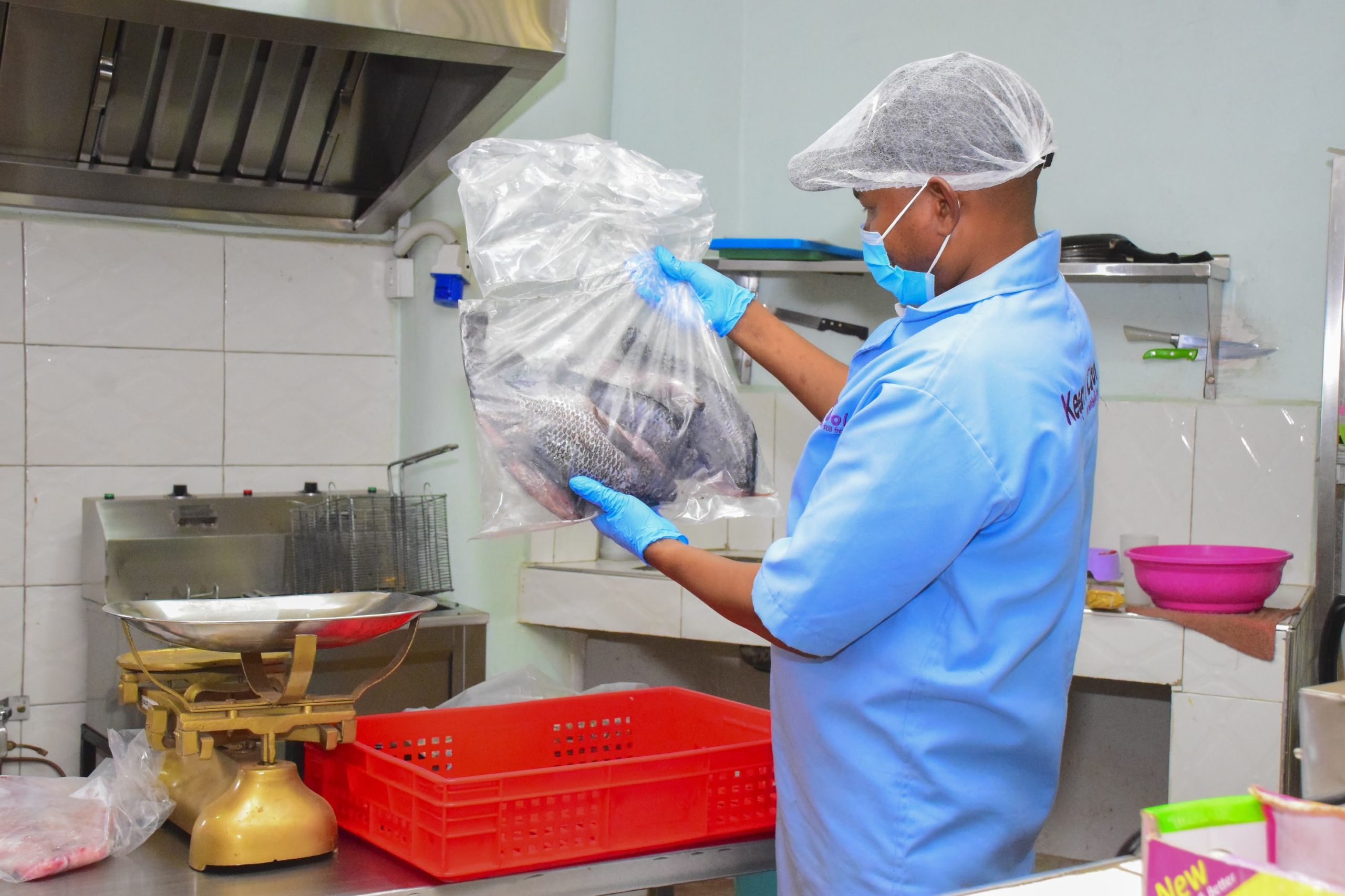
Keep IT Cool is a Kenya-headquartered company providing solar-powered cooling-as-a-service to fisherfolk and small-scale farmers in remote and underserved regions, including communities around Lake Turkana, as well as to poultry-focused value chains across Kenya. Rather than selling cold-storage equipment outright, Keep IT Cool provides affordable access to cold-chain infrastructure through leasing and pay-as-you-use models, leasing solar-powered coolers and freezers to microenterprises and supplying ice flakes and cooler boxes, so producers and off-takers can access reliable preservation without the upfront capital to own a cold room.
By removing this capital barrier, Keep IT Cool unlocks latent productive capacity among producers, particularly fisherfolk capitalizing on seasonal periods of high fish availability, while improved storage lets traders, retailers and other buyers purchase, store and sell more perishable products with less risk, helping more of what is produced reach consumers in good condition. Beyond cold storage, Keep IT Cool provides market-access and cold-logistics support, connecting producers with downstream buyers such as traders, retailers, supermarkets and restaurants, backed by a digital platform, a mobile cold-logistics fleet of hybrid and electric vehicles, and Markiti, its e-commerce channel for last-mile retailers.
The result is an integrated pathway from production to consumption, using clean energy, cold infrastructure, logistics and market access to unlock seasonal production, reduce food losses and increase the volume and value of food reaching consumers.
Samaking is a Kenya-based company that builds reliable market demand for smallholder fish producers, on the premise that better production only pays off if there is a market able to absorb it consistently. Most efforts to fix fisheries value chains start at the point of production, assuming the market will sort itself out once supply improves. Samaking’s founding insight runs the other way: in a market where nearly every buyer is an informal trader operating on thin, cash-constrained margins, more fish supply only translates into more income if there’s a reliable market on the other end, on terms the producer can trust.
Rather than starting with production, Samaking builds from the demand side first, aggregating fish through cold-chain-enabled collection points and distributing it to two kinds of demand it works to make more reliable and efficient: B2B buyers such as restaurants and processors, and its primary market, the informal fish trader network known as mama samaki.
Only once that demand side functions, with buyers who show up consistently, pay reliably, and can absorb volume, does Samaking invest back into production: quality inputs, input financing, insurance partnerships, and training for its smallholder farmers. The production support exists to feed a market that already works, not the other way around.
What makes a fisheries business model work
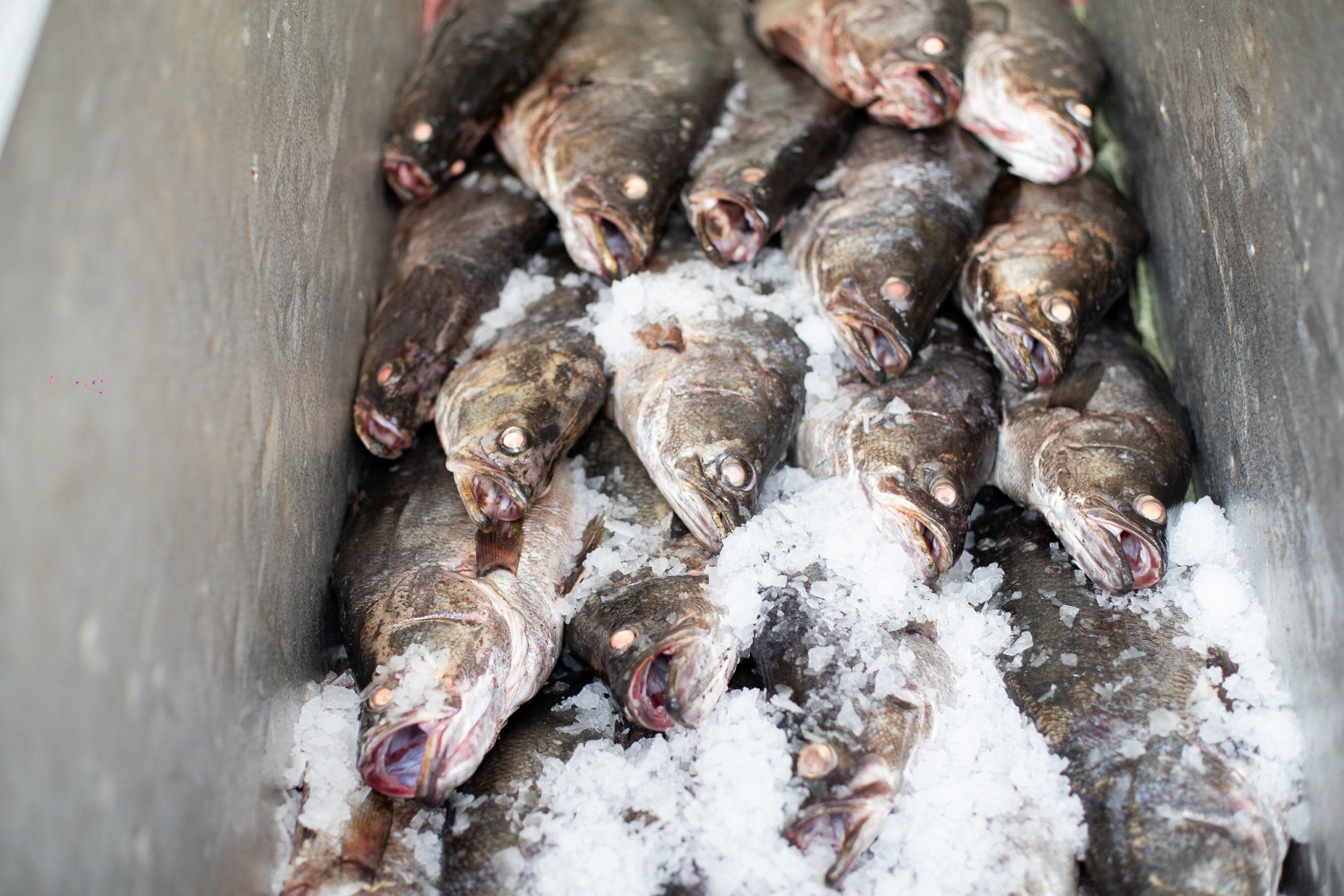
Fish is more perishable than most produce. Without cooling, it has hours, not days, before it’s unsellable. That raises the bar on business model design: cooling has to reach the producer at the point of catch or harvest, not just somewhere downstream, and it has to connect to a buyer who can absorb consistent volume.
It starts with removing the capital barrier to cooling itself. Keep IT Cool doesn’t ask fisherfolk to buy a cold room or a freezer outright; it leases solar-powered coolers and sells ice by the flake, turning what would be a large asset purchase into a small, recurring cost a fisherfolk or trader can afford day to day. Where the end customer is an informal trader rather than a large buyer, deepening the relationship matters as much as the transaction itself.
Samaking’s core move is to make the market side function first: consistent buyers, transparent pricing, and a trader relationship built to last rather than a one-off transaction. Samaking locates its retail outlets close to its clients’ homes in low-income areas, ensuring easy early-morning purchases and pickup for afternoon cooking, removing friction on the demand side before asking more of the supply side. It’s also exploring ways to deepen that relationship over time, so that access to fish becomes part of how a trader’s business runs day to day, not something they could easily switch away from. Only when that demand foundation is in place does investment in farmer productivity; inputs, training, financing – actually convert into higher producer income, rather than just more fish chasing the same weak market.
Underneath both models sits the same structural fix, cold-chain-enabled aggregation that consolidates catch or harvest from many small, fragmented producers into volumes reliable enough for a supermarket, processor, or hotel to buy consistently, performing the same function a larger, vertically integrated fish farm would handle internally, but organized around independent smallholders instead.
Where we see opportunity and where the road gets harder
The market opportunity
As mentioned, East Africa’s aquaculture sector is still nascent by scale but growing fast: production more than tripled between 2017 and 2021, driven by a wide and persistent gap between fish supply and demand. Kenya’s per-capita fish consumption sits well below both the African and global averages, pointing to significant room for growth in supply and consumption alike.
Continent-wide modeling suggests Africa’s fish sector could support tens of millions of jobs and grow aquaculture production value several-fold by 2050 if supply-side and value-chain constraints are addressed. This looks like an underserved, high-growth category rather than a mature one, closer to where distributed solar or PAYGo cooling were several years ago. However, there are several barriers that hold the sector back.
The barriers holding the sector back
- Production economics. Aquaculture remains capital- and operating-cost heavy for small producers, and many fish farms lack the working capital to grow beyond subsistence scale.
- Technical knowledge. Aquaculture requires technical skill to grow high-quality, disease-free fish that meet market standards, including consistent fish size at harvest.
- Cold chain gaps. Reliable cooling is rare at the point of catch or harvest, exactly where spoilage risk is highest.
- Market linkage. Producers often can’t sell consistently, and existing middlemen capture much of the margin without necessarily solving the underlying reliability problem.
- Financing. Aquaculture financing across Africa remains well short of what the sector needs, particularly for the smallholder end of the chain.
Capex / asset finance: A final barrier, requiring more than a cursory mention, defines the very nature of fisheries enterprises in this region. Direct financing for cold chain infrastructure—including solar coolers and industrial freezers—remains largely unavailable to microenterprises. Without specialized asset-finance partners to bridge the gap, companies like Keep IT Cool and Samaking must absorb these capital burdens themselves, taking on the ownership and management of the hardware by necessity rather than by design.
Where the unlock is coming from
Two things stand out as likely to accelerate the whole sector, not just one company’s growth.
The first is treating the informal trader as a partner to build around, not just a sales channel. Samaking’s approach reflects a bet that the way to build a durable distribution network in this sector is to become genuinely useful to traders across their whole business, not just the one product being sold to them.
The second is decoupling cold storage ownership from cold storage access. Keep IT Cool’s leasing and ice-flake model applies the same logic that has driven PAYGo solar adoption elsewhere: far more producers can access cooling through a small recurring fee than could ever afford to buy the equipment outright, which matters enormously in a sector where the producer base is overwhelmingly small-scale and cash-constrained.
What it takes to scale in this sector
- Capital intensity. Cold chain assets such as coolers, cold rooms, logistics vehicles require significant upfront capital deployed close to where fish is actually caught or farmed, often in remote, low-density areas.
- Two-sided execution. Companies serving both producers and buyers need real competence on both sides of the chain at once: production support such as inputs, training, and financing, and demand-side relationships with retail, processing, and hotel, restaurant, and catering buyers
- Aggregation discipline. Consolidating fragmented small-scale supply into volumes a formal buyer can rely on takes strong quality control and logistics coordination across many small suppliers, since consistency, not just quantity, is what buyers are actually paying for.
Why we backed these business models
ClimaFii’s mandate is specific: post-harvest and productive-use energy solutions that involve genuine transformation, preservation, or processing. Both companies fit that mandate directly. Cold chain infrastructure is the mechanism through which they preserve a genuinely perishable product, not an incidental feature bolted onto something else.
The climate case and the productivity case line up here, too. Solar-powered cooling reduces reliance on ice transported long distances and diesel-based refrigeration, while directly determining whether a fisherfolk, farmer, or trader captures the full value of their catch instead of losing it to spoilage or a distress sale. Fish is also a lower-carbon protein than the livestock it often displaces on a plate, adding a second climate benefit that’s tied directly to the business model working commercially rather than sitting alongside it.
We look for companies with a working product already reaching microentrepreneurs, a credible path to reaching thousands of MEs at scale, and a genuine relationship with the financial or input-supply partners microenterprises need to grow. Both companies show a version of that: quality inputs and credit paired with cold chain access on the production side, and financing-ready last-mile retail relationships on the distribution side, proof that reducing spoilage and building microenterprise income are, again, the same problem seen from two ends of the same chain.