From side hustles to digital hustle
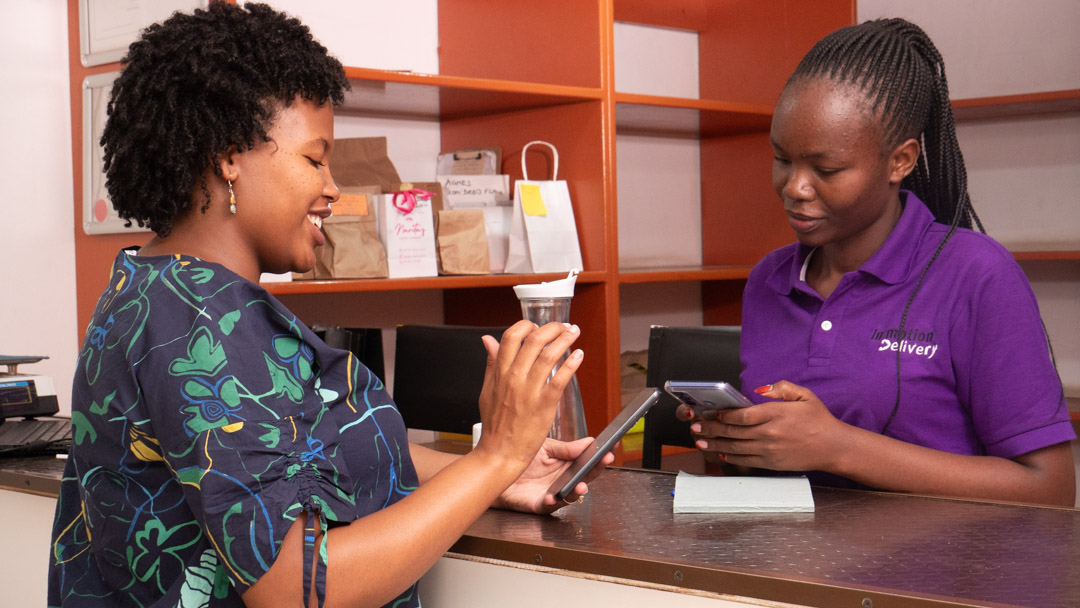
“It never occurred to me I could sell on my phone,” one woman shared. “I thought social media was just for talking.”
Social selling as a route to building incomes
Across developing countries, women micro-entrepreneurs are using social media for small-scale retail, both as buyers and sellers. Yet, many lack the skills and tools to reach a larger market and reap the full benefits of digital sales, especially those with lower education levels.
In Mombasa, Kenya, a pilot project with In Motion Delivery showed that a low-cost program ($80 per woman) of training, coaching and network support can increase median sales by 25% or about $35 a month ($420 a year). While the program is cost-effective, the $80 training fee is still more than most women micro-entrepreneurs can afford. This presents an opportunity for philanthropic organizations and the government to step in and support the micro-enterprise sector.
Understanding the gaps
In the bustling streets of Mombasa, a vibrant community of women micro-entrepreneurs powers the local economy. They sell food, tailor-made clothes, produce personal care products, and run countless microbusinesses that support their families and communities. Yet most still operate offline, relying on walk-in customers and word of mouth that can hold them back from growing their business and reaching a wider market.
This is striking in a city full of smartphones. Women use their phones daily to chat and scroll social media, but rarely to sell. Few realize that these same tools can help them grow their businesses. Many think digital selling is too complicated or takes too much time out of their already busy schedules as mothers, wives, and entrepreneurs.
So, what’s really stopping them? It’s not about having access to smartphones or the internet. The main challenge is understanding that they can use social media for business and how to use it effectively.
For BFA Global’s pilot engagement on social selling, Mombasa was a deliberately chosen location. After some grounding research in Nairobi – a busy urban hub with many social innovation initiatives – we wanted to explore a less-studied region, where women micro-entrepreneurs’ use of social media remained a mystery. Mombasa was the perfect fit as women micro-entrepreneurs here are deeply connected through community networks and face unique economic challenges. Many support and teach each other to start similar businesses.
For most, their business is a way to earn extra income rather than grow rapidly. Family responsibilities shape how they manage their enterprises, and earnings often go straight to supporting their households. These businesses serve as important safety nets during difficult times.
These women know how to use WhatsApp, Facebook, TikTok, and Instagram, but turning these platforms into sales channels, posting consistently, creating engaging content, running ads, or partnering with influencers, feels overwhelming without clear guidance.
Prior research in Nairobi showed that women who flourish online tend to have secondary education or higher, capital to stock inventory, and time to manage constant customer messages. We were interested in whether we’d observe the same phenomenon among lower-income women, who face different realities: limited capital, caregiving duties that fragment their time, cultural norms that restrict their visibility, and little marketing experience beyond their immediate circles. Moving from scrolling Instagram to selling isn’t just learning a new skill, it’s also a mindset shift.
“When I post for business, it feels different. You feel exposed,” one micro-entrepreneur confessed.
Learning from earlier work
BFA Global’s years of supporting small businesses in Kenya’s low-income areas has generated insights that we wanted to test in our pilot. Early successes like the Her Hustle program(2023) showed how digital training, combined with mentorship and business acceleration, could help young women to access clients and build sustainable enterprises, both financially and personally. These lessons shaped our understanding that digital engagement requires familiarity, relevance, and continuous support.
A landscape scan of digital services for micro-entrepreneurs by Jobtech Alliance (2024) also found that while digital platforms can help micro-entrepreneurs reach new customers and increase their income, the most successful models combine online tools with hands-on support, logistics, and trusted local networks. For many informal businesses, the barrier is not technology itself, but knowing how to use it for business, having reliable delivery, and building the confidence to engage with customers beyond their immediate circles.
Another example is a pilot we ran with 20 M-PESA agents (2018) in Nairobi using a WhatsApp group. While it highlighted the power of peer interaction and expert moderation, it also revealed challenges like language and device constraints that slowed engagement until trust was built. This experience reinforced a key lesson: digital marketing alone cannot drive sales if entrepreneurs do not have strong fulfillment and supply chains.
We also went back to look at the Super Platform (2019) research conducted in Tanzania, where informal micro-entrepreneurs dominated but increasingly used social media “super platforms” to grow. In that research, we identified three types of micro-entrepreneurs – experimental, unstable, and stable – showing how micro-entrepreneurs with limited capital and unpredictable demand can benefit from better automation and systemic support.
Together, this research inspired a pilot linking marketing training with vital logistics services like shipping and inventory management to unlock the potential of informal businesses.
Designing the Digital Cubs pilot
Recognizing these gaps, BFA Global initiated the Digital Cubs pilot to test whether women micro-entrepreneurs in lower-income neighborhoods with less formal education could build sustainable online businesses with the right coordinated support system.
Implemented by In Motion a Kenyan logistics company providing last-mile delivery, fulfillment services, and rent-a-shelf solutions, with technical assistance from BFA Global, Digital Cubs offers women micro-entrepreneurs a comprehensive program combining digital training (including photography support), daily mentorship for 24 weeks, peer networks, content creation assistance through a “fixer model”, and reliable delivery services.
This integrated approach reduces financial and psychological risks for women micro-entrepreneurs while also building their confidence and online presence.
In Motion was already running Digital Lioness, a program that supports women micro-entrepreneurs scaling their businesses. Their strong commitment to empowering women at different stages of growth made In Motion a natural and trusted partner for the experiment.
Launched in July 2025, the six-month Digital Cubs program trained 346 women across Mombasa’s lower-income neighborhoods.
As one facilitator reflected, “We didn’t want training that ends in a notebook. We wanted women to post that same day.”
This emphasis on immediate application illustrates the program’s focus on practical, achievable impact.
Although intended as a pilot, In Motion found the Digital Cubs program so attractive that they are now scaling it as part of their regular business offering, charging the entrepreneurs a small fee.
What the program looks like in practice
Digital Cubs offers a hands-on, scalable social selling curriculum that starts with helping micro-entrepreneurs uncover their purpose – their WHY. Women micro-entrepreneurs reflect on why they started their business, how to differentiate it from other businesses, and their product/service offerings. They learn how to use WhatsApp, Facebook, and Instagram to post strategically and produce quality photos, videos, and captions that attract customers.
The curriculum incorporates activities, reflection, and goal setting to ensure training translates into tangible business growth.
To deliver quality at scale, Digital Cubs uses a train-the-trainers model, engaging local trainers who are also micro-entrepreneurs to run short intensive workshops and then mentor women micro-entrepreneurs closely. This fosters a culture of daily posting and accountability.
Many women micro-entrepreneurs report that knowing someone is supporting and checking on them regularly is crucial to their persistence and success.
As one micro-entrepreneur shared, “When I remembered why I started, posting became easier. I wasn’t just selling; I was helping someone.”
Alongside this mindset shift, peer networks flourish, with women sharing stock, encouragement, and referrals, fostering a collective spirit that strengthens everyone’s businesses.
To address time and skill gaps for content creation, the Digital Cubs program introduced a “fixer model,” employing a social media expert who assists with creating photos and captions.
“When they helped me take photos, I felt proud. My business looked real,” said one micro-entrepreneur.
Women also pool stock and marketing on shared social pages. For instance, coconut oil producers have combined efforts to fulfill bigger orders, leveraging In Motion’s delivery services. Collective marketing and group visibility also accelerate growth while sharing the risks inherent in solo selling.
Beyond formal training, many women micro-entrepreneurs independently adopted digital tools such as ChatGPT to craft captions.
One said, “I used to wonder how others came up with good Instagram captions and presentations. Now I know they use tools like ChatGPT and so can I.”
The women also learned to use other digital tools to improve their product promotions. For instance, women used CapCut (a video editing app) to create polished videos quickly. Photography workshops taught efficient batch shooting using lighting.
“Good light changes everything. I take many photos in one day and post later,” one micro-entrepreneur explained.
Early results and what we are learning
Six months in, the impact of the Digital Cubs pilot is clear. An endline survey of 280 women-led micro-businesses showed that median monthly sales rose 25%, from a baseline of 16,000 KES ($135) to 20,000 KES ($170), with 60% of women micro-entrepreneurs showing growth and a median uplift of 5,000 KES ($42).
Digital sales jumped from near zero during baseline median to 20% of sales, and the share of enterprises highly dependent on social sales nearly doubled to 56%, although 10% still reported none. Take-home profits increased from a baseline of 8,000 KES ($68) to 10,000 KES ($85), reflecting real household benefits.
Employment among the 280 businesses remained largely stable, reflecting the small scale of most operations. Permanent employment edged up slightly from 47 to 49 jobs across the cohort, with only 10 micro-entrepreneurs (3.6%) adding staff and 7 (2.5%) reducing their workforce. Part-time employment, however, declined sharply from 173 to 43 positions. This drop should be viewed cautiously since family labor was not captured in the baseline survey. At the endline, 41 businesses (about 15%) reported that family members were helping out, suggesting some roles once recorded as part-time may now be recorded as filled by relatives, rather than a decline in employment.
Overall, around 85% of the businesses reported no change in employment, confirming that most remain small, owner-run operations where growth tends to be seen first in sales and stability rather than staffing increases.
Most women micro-entrepreneurs are deeply committed, often balancing their businesses with household responsibilities. They slightly increased the time they spent working on their businesses during the program. Average weekly hours went up from 37.3 at the start to 39.6 by the end, while the median and most common figure stayed steady at 40 hours, showing that many women already treated their businesses like full-time jobs.
Looking closer at how women used their time, 43.6% worked more hours, 27.9% worked fewer, and 28.6% kept their hours the same. This highlights the different ways women adjusted their business time. Most women (72%) worked from home.
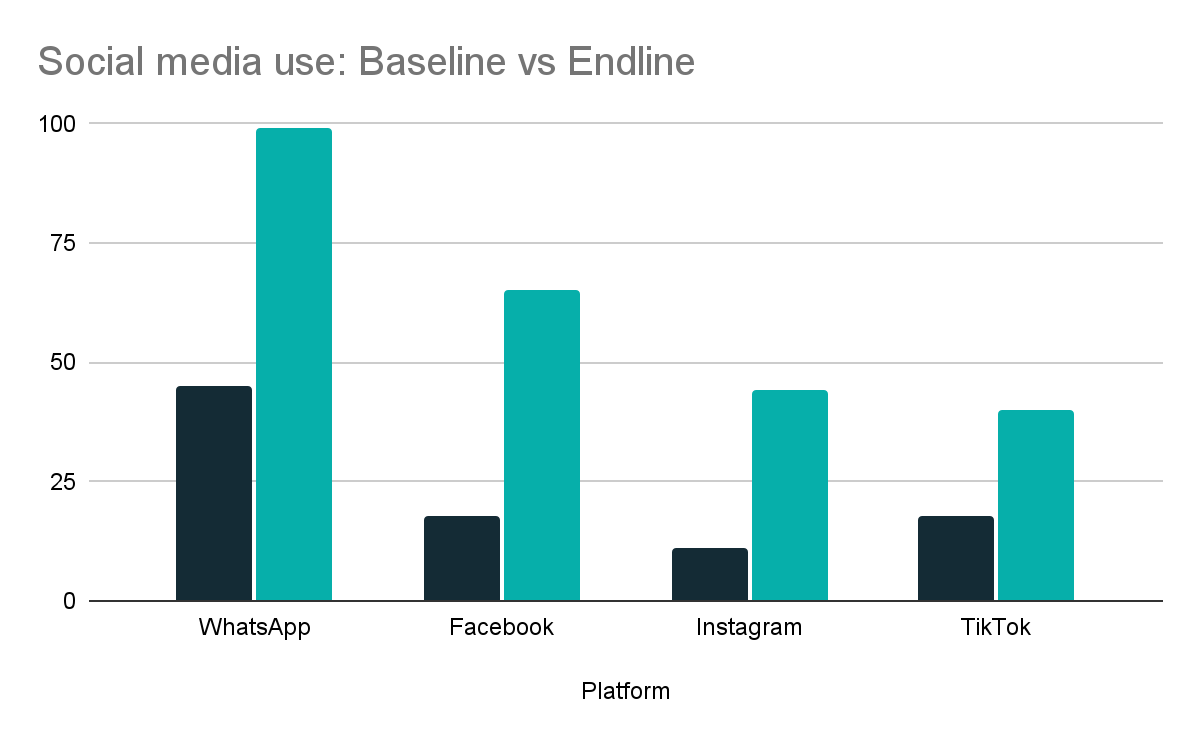
The use of social media for business increased significantly after the Digital Cubs program, with WhatsApp becoming nearly universal and strong growth in Facebook, Instagram, and TikTok use. On average, each woman was using almost three social media platforms by the end of the program, reflecting stronger marketing skills and greater confidence compared to baseline, when social media use for business was still limited.
Training feedback indicates that social selling (56%) and photography (33.5%) were the most valuable topics. Many also sought skills like advanced marketing, customer care, business management, and access to finance, showing ambitions beyond survival. Nearly 69% of women micro-entrepreneurs reported no complaints – a sign of high engagement and relevance.
Still, clear patterns are emerging among those who are thriving. During the focus group discussions, we identified this group with the help of the trainers, who were closely monitoring the micro-entrepreneurs’ daily activities throughout the program. These were the micro-entrepreneurs who posted consistently and reported higher sales. Many of them offered unique products, often cottage industry-type goods, as well as dressmakers producing distinctive designs. These entrepreneurs intentionally built strong customer relationships by responding quickly, personalizing their service, and following up consistently after purchases. They treat platforms like Instagram and WhatsApp as their storefronts, actively leverage their peer networks, and embrace digital tools such as ChatGPT and CapCut.
Most importantly, they put the Digital Cubs training into action by staying organized, tracking expenses, planning content in advance, and making deliberate choices instead of posting reactively. These women may not have more resources or formal education, but they have developed habits that grow stronger and more effective over time.
However, some challenges remain. About 18% of women micro-entrepreneurs reported declines in sales, often linked to life events unrelated to the pilot program. One woman shared during the endline data collection that she had recently given birth, and postpartum caregiving was limiting her ability to maintain her business’s online presence.
While digital tools offer valuable support, they cannot fully overcome the social and economic realities these women face every day.
What comes next
The story unfolding in Mombasa shows how coordinated training, continuous mentorship, hands-on content support, shared platforms, and dependable delivery create an ecosystem that empowers women micro-entrepreneurs to move from isolation to confidence and connectivity. The smartphone is no longer just a communication device but a gateway to autonomy and opportunity.
In Motion is expanding the Digital Cubs program by building on what worked well during the pilot. It continues to support women micro-entrepreneurs through mentorship, with trained local mentors guiding and encouraging them as they grow their businesses, for a small fee. The program now provides a clear pathway for entrepreneurs to progress, starting with basic digital skills and ultimately scaling their businesses, with some becoming peer leaders who support others in the community.
To remain sustainable, the Digital Cubs program is expanding services such as the fixer model, which offers practical, affordable support for photos, videos, and social media content. The program is also connecting women to ethical finance partners, shared resources like cameras and lighting, and better market opportunities through peer networks and local business forums.
In addition, the Digital Cubs program is introducing AI tools to help entrepreneurs create content, respond to customers, and manage their businesses more efficiently. For graduates who want to grow further, an Alumni Growth Bootcamp offers advanced training in scaling businesses, digital marketing, and financial planning, with participants contributing a fee to take part.
However, sustaining and scaling this progress requires ongoing investment. Since most women micro-entrepreneurs cannot afford to pay for full training, donor and public support is crucial to deepen and expand the program’s impact. Excluding indirect costs, training one micro-entrepreneur over six months costs about KES 12,537 (around $80).
While the pilot demonstrated promising results, it has not achieved commercial self-sufficiency for In Motion because even a modest training fee is unaffordable for most micro-entrepreneurs. This creates an opportunity for philanthropic or government funding to support women to access the program.
Entrepreneurs like Fatma Mazuri, In Motion’s founder, are also driving the entrepreneurial and social commitment needed to fuel this transformation. Her vision is to see all women micro-entrepreneurs progress from day-to-day survival to running thriving digital businesses. Her passion and entrepreneurial spirit, combined with scalable mentorship infrastructure, offers a blueprint for expanding women’s economic empowerment in Kenya and beyond.
As the Digital Cubs pilot phase concludes, Mombasa’s women micro-entrepreneurs stand ready to redefine micro-business growth. Digitally savvy and connected, they are no longer waiting for change, they are creating it.
This progress can only continue if they receive the much-needed philanthropic funding and public investment to invest in their livelihoods.