The missing middle: What early-stage capital looks like for heat innovation in Nigeria

As temperatures continue to rise across Nigeria, a new generation of entrepreneurs is developing innovative solutions to some of the daily challenges, such as food spoilage, unsafe working conditions, overloaded energy systems, and declining household and business productivity. These solutions, ranging from cooling technologies and climate-smart services to data-driven tools, are designed to help communities, businesses, and workers adapt to extreme heat. However, innovation alone isn’t enough. The real question is whether there is enough capital available to support heat ventures beyond the idea stage.
As part of the TECA Heat Action Wave (THAW) program in Nigeria – an initiative of BFA Global supported by FSD Africa and ClimateWorks Foundation, with funding from the UK’s Foreign, Commonwealth & Development Office (FCDO)- we explored how early-stage ventures developing heat-resilience solutions are being financed. Our analysis suggests that despite a diverse range of funding entities supporting early-stage ventures, there is a crucial gap for those trying to demonstrate they can scale. This “missing middle” can mean promising innovations are stuck at the idea phase and are unable to grow.
About TECA Heat Action Wave
THAW focuses on heat resilience, an area of climate adaptation that has received far less attention than mitigation technologies. The program supports early-stage ventures through a structured venture-building process that helps founders strengthen their business models, test solutions with users, and prepare for investment.
This work is especially relevant given current trends in climate finance. UNEP’s Adaptation Gap Report shows that while adaptation finance needs in developing countries are estimated at US$215–387 billion per year this decade, global public climate finance is falling far short of this. In Africa, adaptation still receives only a small share, with CPI’s 2024 landscape report, commissioned by FSD Africa, highlighting the gap between need and available capital.
A growing ecosystem for early innovation
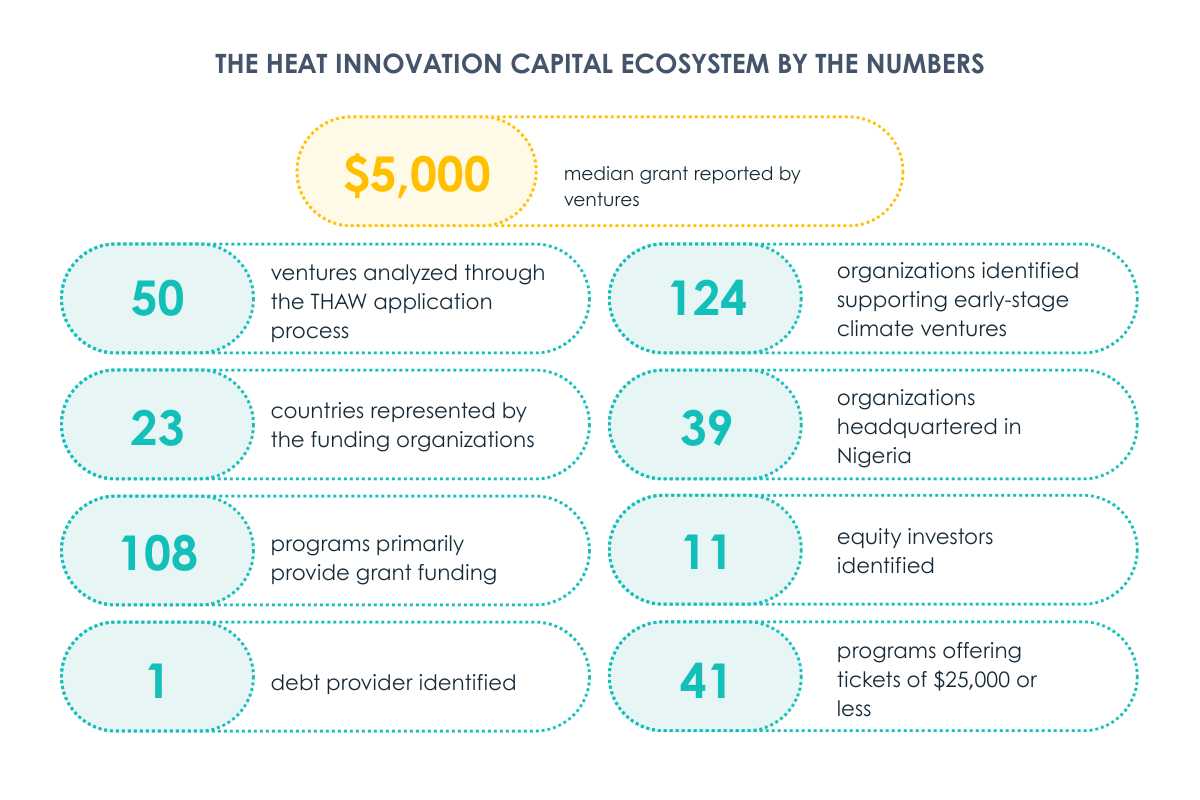
To better understand the capital ecosystem for heat innovation in Nigeria, we reviewed the funding histories of 50 ventures that applied to THAW and mapped the organizations that supported them. Across those ventures, we identified 129 organizations that had provided capital, technical assistance, or both. After removing a handful of entities for which we could not verify information, we analyzed 124 programs and funding vehicles.
One important finding stands out: the ecosystem supporting early-stage climate entrepreneurs in Nigeria is larger than it may first appear. The organizations in our sample span 23 countries. Nigeria hosts the largest share, with 39 organizations headquartered there, followed by the United States, South Africa, the United Kingdom, Kenya, and the Netherlands. Together, these actors form a network of accelerators, challenge funds, foundations, and innovation programs that create early opportunities for ventures creating heat-resilience solutions.
Most of these programs operate on recurring cycles, creating a relatively steady pipeline of support for entrepreneurs testing and refining new ideas.
Small catalytic grants drive early innovation
The early-stage capital stack is weighted heavily toward grants.
Of the 124 entities we analyzed, 108 primarily provide grant funding, 11 provide equity investment, and only 1 provides debt financing. A small number combine grants with other instruments.
Ticket size data tells a similar story. Of the programs that publicly disclosed investment amounts, most offered tickets of $25,000 or less. Startups reported a median grant size of about $5,000, while many programs advertised maximum funding of around $50,000.
These catalytic grants play an important role. They help startups test ideas, build early prototypes, and generate the first evidence of product-market fit. In many cases, they are paired with technical assistance, including mentorship, venture-building workshops, investor-readiness training, and support for pilot design.
This combination of money and support helps ventures move from concept to a viable early-stage business.
A diverse coalition behind early climate ventures
The organizations supporting these programs represent a broad mix of actors interested in climate innovation.
Corporate foundations and global companies often run accelerators or innovation challenges that provide small grants alongside in-kind support such as cloud credits or partner access. Development finance institutions and multilateral organizations frequently support climate innovation through thematic programs and blended finance vehicles. Donors and foundations also play an important role by funding venture-building and ecosystem development programs.
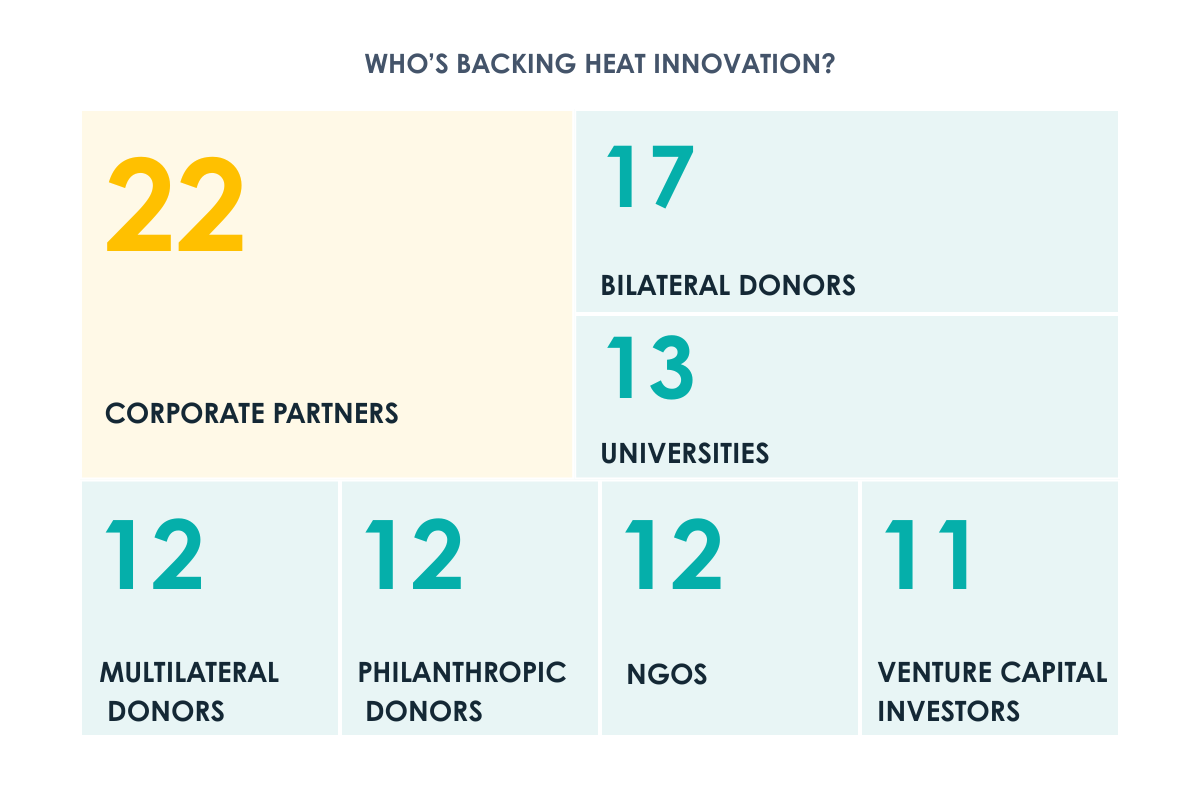
Locally, banks, venture funds, and innovation hubs help channel these resources into on-the-ground support for entrepreneurs.
In many of these programs, technical assistance is as important as capital. Founders often receive mentorship, leadership coaching, and access to networks that help them refine business models and prepare for investment.
The missing middle
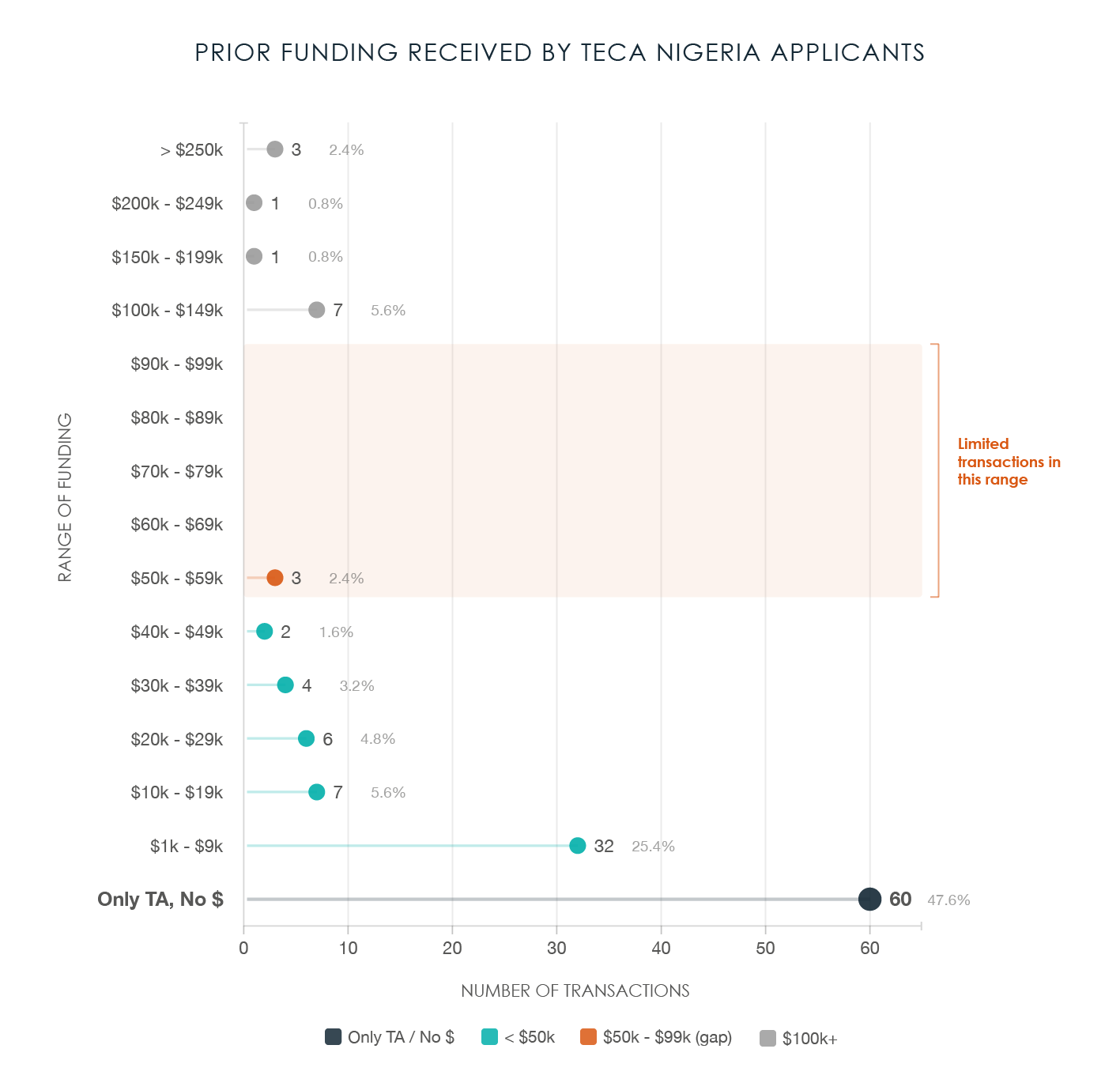
Despite this strong early-stage ecosystem, funding thins out after the first injection of small grants and accelerator support.
Few startups reported raising funds from pre-seed investment rounds, and even fewer had access to financing for solutions that require physical infrastructure, such as cooling systems, energy technologies, or distributed service models.
Many founders described being stuck in the “prove-it” stage. At this point, startups may have early pilots or customers, but they still need capital to show that their models can scale.
This is where the funding gap becomes most visible. Heat adaptation solutions often require upfront investment in hardware, network infrastructure, or energy-linked systems, but financing available at this stage remains limited. Global climate finance data shows that adaptation is already underfunded relative to need, and our findings suggest the same pattern holds at the startup level.
Without financing tailored to this phase, promising innovations risk remaining only ideas.
Looking ahead
The entrepreneurs supported through the TECA Heat Action Wave show that innovation in heat resilience is well underway.
Founders are creating solutions that address the realities of rising temperatures, from protecting food supply chains to improving access to cooling and climate data.
At the same time, the capital ecosystem supporting these ventures is still evolving. Small catalytic grants and accelerators are helping many entrepreneurs take their first steps. The next phase will require financing approaches that can help promising solutions move from pilot projects to sustainable businesses.
As heat reshapes economies and livelihoods across Nigeria, building a steady pipeline of capital will be essential to scaling the innovations that communities will rely on in an increasingly hotter future.
![[Press Release] 7 African Startups to Receive $385k to Develop Solutions for the Blue Economy](https://bfaglobal.com/wp-content/uploads/2023/02/Wave-1-startup-announcement--450x250.png)