From incentives to impact: 5 ways Victory Farms is powering livelihoods through loyalty and skill building
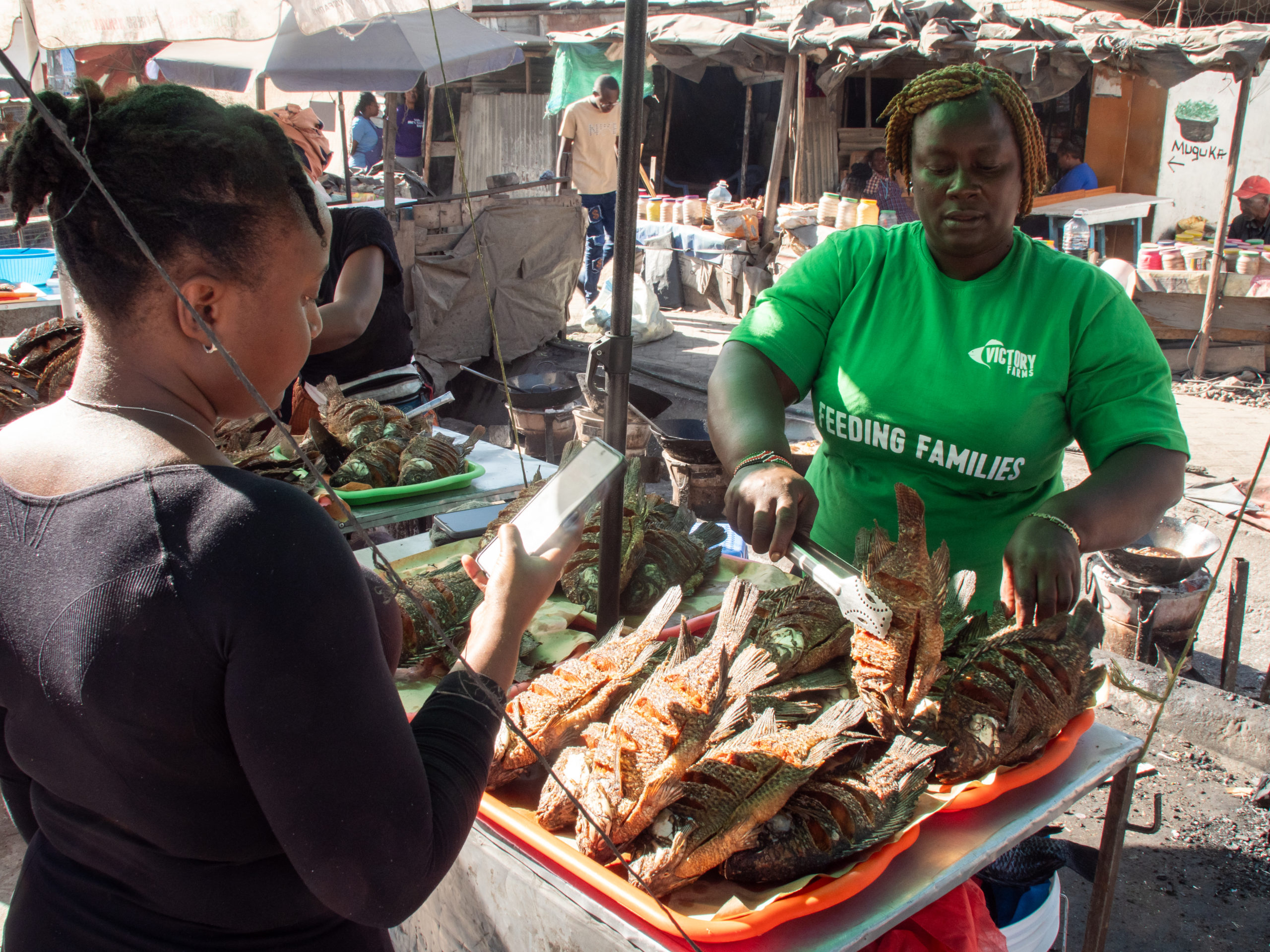
In Kenya’s fast-growing fish industry, thousands of women sellers, known as Mama Samaki, sit at the heart of last-mile distribution. Many come from low-income backgrounds, have limited formal education, and rely on fish selling as one of the few available pathways to earn a dignified living. Despite their critical role in last-mile delivery, most operate with thin margins, face frequent supply delays, and struggle with unpredictable supply and limited access to capital or business support. As a result, their earnings and business growth often remain constrained.
Victory Farms, a tilapia farming company, is working to address these challenges. By managing the entire process, from breeding and raising the fish to processing, transporting, and delivering them, Victory Farms ensures a more reliable, high-quality, and consistent supply of fresh fish. With 89 branches strategically located in low-income areas where these women live and work, the company provides a reliable and high-quality fish supply to its network of 15,000 Mama Samaki, who account for 80% of its sales.
This more reliable supply model has created opportunities for income growth and business stability, enabling Mama Samaki to gain financial independence, educate their children, and pursue long-term goals. Beyond supply, Victory Farms is investing in a comprehensive Market Women Program designed to equip women entrepreneurs with the tools and support needed to build sustainable businesses. BFA Global partnered with Victory Farms through the Opportunity Leads Umbrella Fund project to strengthen the development of the Mama Samaki program, focusing on interventions that support women entering the fish-selling business (“Dada Samaki”) and those operating at lower levels (“Mwanzo”) to set up viable businesses and increase their incomes.
This first blog of a three-part series highlights five practical ways Victory Farms, with support from BFA Global, is creating an inclusive market engagement model that engages low-income women as loyal customers while helping them set up, grow, and sustain successful businesses. Here are 5 ways they are doing so:
1. Providing productive business assets that improve sales
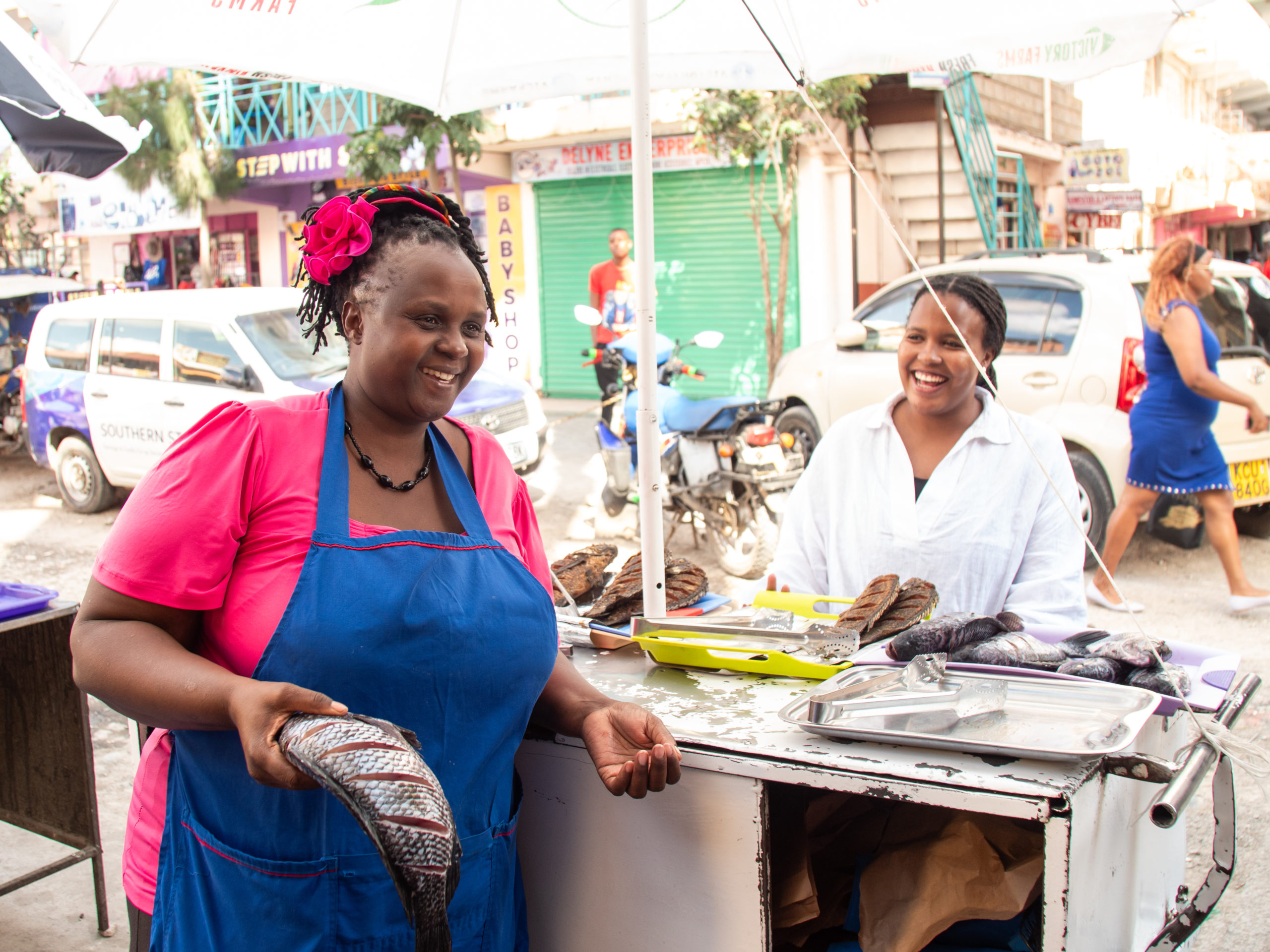
Most Mama Samaki are the sole earners in their households, relying on their fish businesses to cover all family needs. This makes it difficult for them to reinvest profits into business growth. To explore ways of increasing the incomes of low-volume Mama Samaki “ Mwanzo”, BFA Global’s nano engagement, a short-term experiment, with Victory Farms distributed a set of branded business assets to 27 selected women across Kisumu, Nairobi, and Mombasa. The kit included practical tools such as umbrellas, solar lights, cooler boxes, dust coats, gum boots, gloves, and carts, to test whether their effective use could help boost sales and improve day-to-day operations.
The results of the nano showed positive initial outcomes. Umbrellas and solar lights were the most appreciated, enabling vendors to extend their working hours and continue operating in all weather conditions. Dust coats and branded aprons also added value by enhancing professionalism and building trust with customers. Larger assets, such as carts and coolers, were useful only for some women. In many cases, the carts were too large and costly for vendors with limited space. These higher-value assets may be more effective when distributed on a demand-driven basis to women who have the capacity and business conditions to leverage them well. Women who used the business assets experienced a 5% increase in sales by weight and a 52% increase in value compared to non-participants, although the latter was largely driven by sharp price increases for small fish at the time. Most vendors were unable to fully pass these higher costs on to customers.
Overall, the nano had positive outcomes, but we also concluded that Victory Farms needs to recognize the gender dimensions of this program. Many men expressed interest in purchasing the expensive items, such as the push carts, outright in cash. While women were also excited, most faced barriers, including pressure to divert earnings for household expenditures, relatively low incomes, and sometimes limited access to formal and informal credit. Offering business assets only for cash, therefore, ran the risk of inadvertently masculinizing the space, especially if the carts pull market share from existing women vendors. BFA suggested that offering assets through loyalty points, rather than cash alone, may bring them more within reach and enable women to access high-value assets that might otherwise be purchased primarily by men.
2. Mobilizing Mama Samaki’s fish purchase behaviour through a points-based Loyalty Program
Designed to reward Mama Samaki for their sales consistency and volume, Victory Farms developed a loyalty program that provides key business assets through a points-based system. Customers earn one point for every KES 500 spent with Victory Farms. Once enough points are accumulated, they can redeem them for rewards such as aprons, dust coats, solar lights, and cooking oil, among others.
In its first phase, the program was rolled out to Mwanzo sellers, and excitement around the loyalty scheme has been high. Many have begun to appreciate the practical benefits of the rewards offered. Within the first nine months, 246 rewards were redeemed by 144 unique Mwanzos out of the 619 women introduced to the program.
Our ongoing qualitative interviews reveal that cooking oil is the most frequently redeemed reward, available for just 60 loyalty points. The oil proved especially useful for smaller vendors, who use around three to four liters each day. Redeeming it for free allowed them to save money for household expenses and savings.
Frying pans, aprons, and parasols were also among the other most commonly redeemed items. While the Western region recorded a higher number of total redemptions, Nairobi, which has a higher number of high-volume sellers, showed a greater share of redemptions for higher-value items such as parasols, trolleys, and solar lights. Overall, Nairobi redeemed 42% more points than the Western region, despite having a lower number of unique customers exchanging points.
3. Building capacity and confidence through training
BFA’s end-of-nano survey revealed that Mama Samaki were eager to receive training on the right skills and knowledge to strengthen their businesses. In response, Victory Farms introduced targeted skill-building programs designed to build two-way dialogue with sellers, encourage sales growth, and introduce the loyalty program.
To better understand the key barriers to Mama Samaki’s sales growth and their priority training needs, BFA conducted a training needs assessment. The Mwanzo assessment identified areas including attracting and retaining customers, fish preservation and pricing, maintaining financial records, business management and expansion, and strategies to grow business capital. Dada Samaki had more specific needs, as many were newer to the business and less experienced in fish handling. Their priorities included understanding how to identify fish quality, frying to match customer preferences, and storing leftovers safely. They also wanted guidance on choosing suitable stall locations, setting up essential equipment, and managing competition effectively.
Drawing on these insights and BFA’s broader experience of what works in training, a comprehensive three-hour curriculum was developed. The sessions included short, hands-on lessons and mindset-building exercises, such as sharing success stories and the journeys of high-performing peers, to boost confidence and improve results. Both in-person and virtual sessions were piloted across three cohorts, reaching a total of 619 Mama Samaki and 90 Dada Samaki.
The results of the early phone surveys to assess the effectiveness of these sessions were encouraging: All the participants reported using improved customer-handling techniques, and 75% had implemented new financial management practices. The most notable tangible improvements include stronger customer relationships, improved financial tracking, and more efficient daily operations.
Notably, half of the respondents also reported increased sales driven by the ability to attract more customers, adjustments in operating hours, and effectively managing and selling out stock.
I now make a good profit of about KES 2,000 per day after covering all expenses, including paying my assistants. Previously, I was not making a profit, but by reinvesting back into the business and increasing my stock, I am now seeing positive returns.
Beyond these tangible outcomes, the women expressed a renewed sense of confidence, motivation, and optimism about their futures. One participant noted that she now feels like she is doing business with a plan: “It is like I just started my business, I was joking before,“ noting that she found new meaning and purpose in her work after applying the training lessons. A more detailed analysis comparing in-person and virtual training methods, as well as the long-term benefits of training, will be addressed in part 2 of this series.
4. Equipping new entrants through mentorship and starter kits
BFA’s experience with micro and small retailers has revealed that they often have limited support and may struggle to find relevant advice related to business decision-making. This challenge is particularly pronounced for new entrants who lack market knowledge and the social and business networks needed to navigate competition.
To set Dada Samaki up for success, BFA recommended supplementing classroom training with a mentorship program led by experienced, high-performing sellers. This one-day, hands-on job shadowing approach allowed new entrants to gain practical experience and learn strategies for overcoming key challenges, such as managing competition and leftover stock.
The job shadowing also served as a graduation program to gain access to discounted “starter packs” including a wok, ladle, and cooking oil, to help ease and accelerate their transition to independent selling. The starter kits were offered as a loan redeemable through loyalty points, which participants could repay with future purchases.
A total of 32 Dada Samaki completed the job shadowing and received starter kits. Many were women who had recently started or restarted their businesses within the past six months and required only part of the equipment.
“I am grateful to Victory Farms, mostly because I have benefited from the organization, I received a frying pan, cooking oil, frying spoons, as I mentioned previously, i have had challenges and a number of times i tried starting the business but i couldn’t until I got this items from victory farm and i was able to start, getting money to buy all those items wouldn’t have been easy….Thank you”
5. Facilitating access to credit
Conversations between Victory Farms, BFA, and the sellers revealed that limited access to finance remains one of the most significant challenges. Many women, as sole providers for their households, must constantly balance business capital with other financial demands. Without sufficient funds to purchase adequate stock, especially among more experienced sellers, their capacity to buy and sell fish is constrained, ultimately limiting their earnings and business growth.
To address this challenge, Victory Farms, in partnership with Pezesha, introduced a stock credit facility that allows fish sellers to purchase stock on credit rather than paying in cash. With a 7-day repayment period and a 2% interest rate, this short-term loan is designed to help sellers maintain stock levels, stabilize cash flow during periods of low liquidity, and build a culture of timely repayment.
A total of 3291 loans were disbursed between May 2024 and November 2025 to 690 unique Mama Samaki. Notably, 93% are repeat users, suggesting that sellers find value in the offering. However, uptake across the broader pool of eligible Mama Samaki remains limited, indicating room to strengthen awareness and trust in the product.
BFA is currently conducting a data analysis and qualitative survey with Mama Samaki to assess the credit product’s performance and gather insights for design improvements. The study will also explore the model’s impact on sales performance, income stability, and overall livelihoods of small-scale fish retailers. Findings from this analysis will be shared in Part 3 of this blog series.
Emerging operational and market constraints
While the pilot has generated valuable insights, business performance remains influenced by broader operational, market, and structural constraints. A few challenges have begun to surface through the course of implementation, and Victory Farms has already initiated steps to address them. The next installment of this blog series will detail these remedial steps and their outcomes.
- Supply and dynamic pricing: Women value Victory Farms for its reliable supply, consistent quality, and partially cleaned stock, which reduces handling time and operational burden. However, periodic constraints in the availability of certain fish sizes, particularly smaller sizes (1–2), which are in high demand among low-income households, combined with market-responsive price adjustments, place pressure on margins. When prices increase, women are often unable to pass higher prices on to customers, resulting in thinner margins and reduced earnings during these periods.
- Operational constraints: Although enthusiasm for the loyalty program is high, a few women have faced challenges redeeming their points. As the programme scales, some operational refinements will be needed, including improving the availability of redemption forms, clarifying communication around eligibility and redemption timelines, and streamlining documentation requirements to ensure women are able to redeem their points with ease. In high-traffic branches, increased customer volumes have also highlighted the need for more effective staff enablement to ensure all customer queries are addressed.
- Limited credit uptake: Operational delays also contributed to low uptake of the available credit products. This was compounded by low confidence in formal financial services, skepticism toward unfamiliar products, and a preference for taking loans from family and friends. As a result, many eligible sellers remain hesitant to try the stock credit facility.
- Structural and market-level challenges: Finding the right location is a key determinant of the success of a Mama Samaki’s business, who rely on areas with heavy foot traffic. Finding the right location remains a major constraint, with some sellers operating in areas that limit access to customers or storage facilities. Addressing this challenge may require broader coordination with local government and market authorities.
Looking ahead: Scaling impact through innovation
As the pilot continues and deeper results emerge, Victory Farms is refining its approach to building a truly inclusive and scalable Mama Samaki program. Early evidence shows that combining high-quality products with practical tools, loyalty rewards, training, and mentorship can unlock meaningful improvements in women’s incomes and confidence.
BFA Global is now completing qualitative research and data analysis to assess the impact of each of these interventions, which will help sharpen program design and guide future investments. Part Two of this series will share these new findings and dig deeper into what drives sustained sales growth and loyalty among Mama Samaki.
Our work so far reinforces an important insight: when retail sellers are directly connected to a main supplier, that supplier holds powerful levers to strengthen the economic stability of women’s enterprises, whether through credit, skills training, or access to productive assets. Which of these levers will ultimately be the most transformative remains to be seen, and the voices of the Mama Samaki themselves will help reveal the answer.